


Updated July 2026
Practicing chess at home sounds like a breeze until you actually sit down to do it. We’ve all been there: you’ve got a million apps, YouTube tutorials, and open courses, but you still feel stuck. Because access is not the problem. Structure is.
Most of us fall into the "fake improvement" trap. One puzzle here, one video there, one random game before bed, and the gap between effort and progress quietly keeps growing. You can do an impressive amount of fake chess improvement at home. Helpful, yes. Real practice, not quite.
This article looks at why most home practice does not work, what actually makes home practice effective, the complete home practice solution, and how to use it.
Why Home Chess Practice Usually Falls Short
Usually, practice falls apart because we have all the gear but no game plan. Here’s why the usual suspects often let us down:
|
Practice Method |
Real Board Feel |
Immediate Feedback |
Challenge Levels |
Easy to Start Consistently |
Progress Tracking |
|
Apps |
No. It all happens on a screen. |
Sometimes. Not always in real games. |
Yes. Most apps offer levels. |
Very easy. Can become random. |
Sometimes. Saves games, not always patterns. |
|
Videos |
No. You watch rather than play. |
No. Videos cannot react to your mistakes live. |
No. The challenge is passive, not interactive. |
Very easy. Easy to confuse with practice. |
No. They do not track your mistakes or habits. |
|
Books |
No. You read rather than play. |
Limited. Books don’t answer your moves live. |
No direct opponent or adaptive challenge. |
Medium. Easy to open, harder to stick with. |
No. Tracking depends on your own notes. |
|
Online Play |
No. Unless you pair it with a real board. |
Sometimes. Usually after the game. |
Yes. You can find many opponents and levels. |
Very easy to start. That can get unfocused. |
Yes. Games and ratings are saved. |
So if most home practice methods fall short in one way or another, the next question is simple: what does effective home chess practice actually need in order to work?
The Key Elements of Effective Home Chess Practice
If home practice falls apart because it feels random, passive, or hard to stick to, then the answer is not more chess content. It is a better setup and a better environment. To move past chess-flavored scrolling, a home setup needs to bridge the gap between playing and studying.
True improvement happens when your practice hits five specific marks:
- Tactile Engagement: Chess is a spatial game. Moving physical pieces on a board engages the brain differently than clicking a mouse, leading to better focus and longer mental stamina.
- The Feedback Loop: Learning is most effective when the correction happens close to the mistake. If you only analyze a game three hours after you played it, the logic behind your error has already faded.
- Controlled Friction: You need an opponent who is "just right" for your skill level, not so easy that you're bored, and not so hard that you're crushed. Deliberate-practice research supports this logic: the goal is not random repetition, but targeted challenge that pushes performance without turning practice into noise.
- Low Barriers to Entry: The best routine is the one you actually start. If setting up a session requires clearing a table, syncing three devices, and finding a partner, you’re less likely to do it.
- Retrievable Data: Improvement is a game of patterns. You need a way to look back at your messy games to see if you are repeating the same mistakes over time.
The Gap Between Theory and Reality
Knowing that you need feedback, a real board, and progress tracking is a great first step, but actually managing all those moving parts at home is where most players lose momentum.
Usually, this is where the patchwork begins: you pull out a wooden board, open a laptop for engine help, grab a book for theory, and maybe keep notes on the side. None of those tools is useless. The issue is that they often solve only one part of the practice at a time.
ScienceDirect's research supports structured practice, useful challenge, and feedback-rich learning, but most home setups still ask the player to stitch those elements together manually. That is often where consistency breaks.
The real secret to sustainable practice is not just knowing what good practice looks like. It is having a setup that makes those conditions easier to repeat.
The Complete Home Practice Solution: GoChess
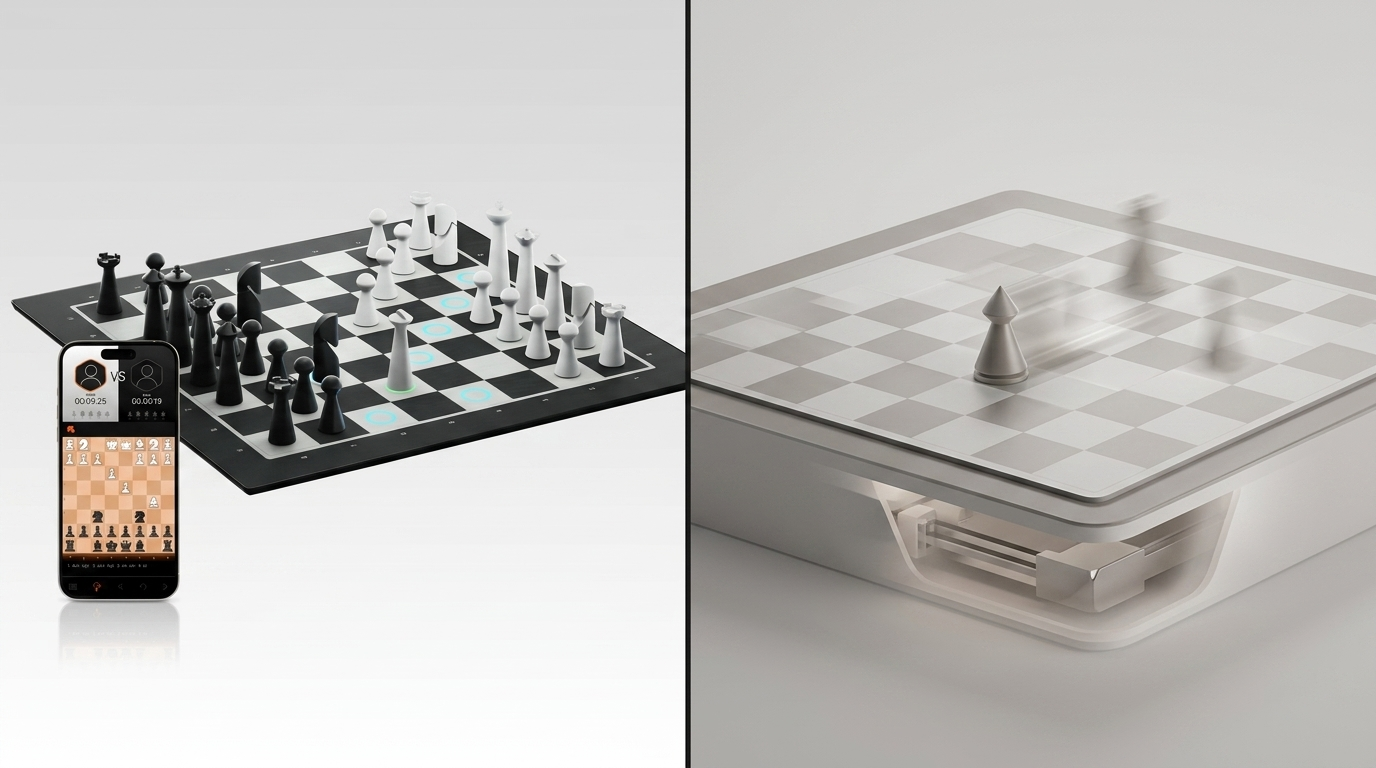
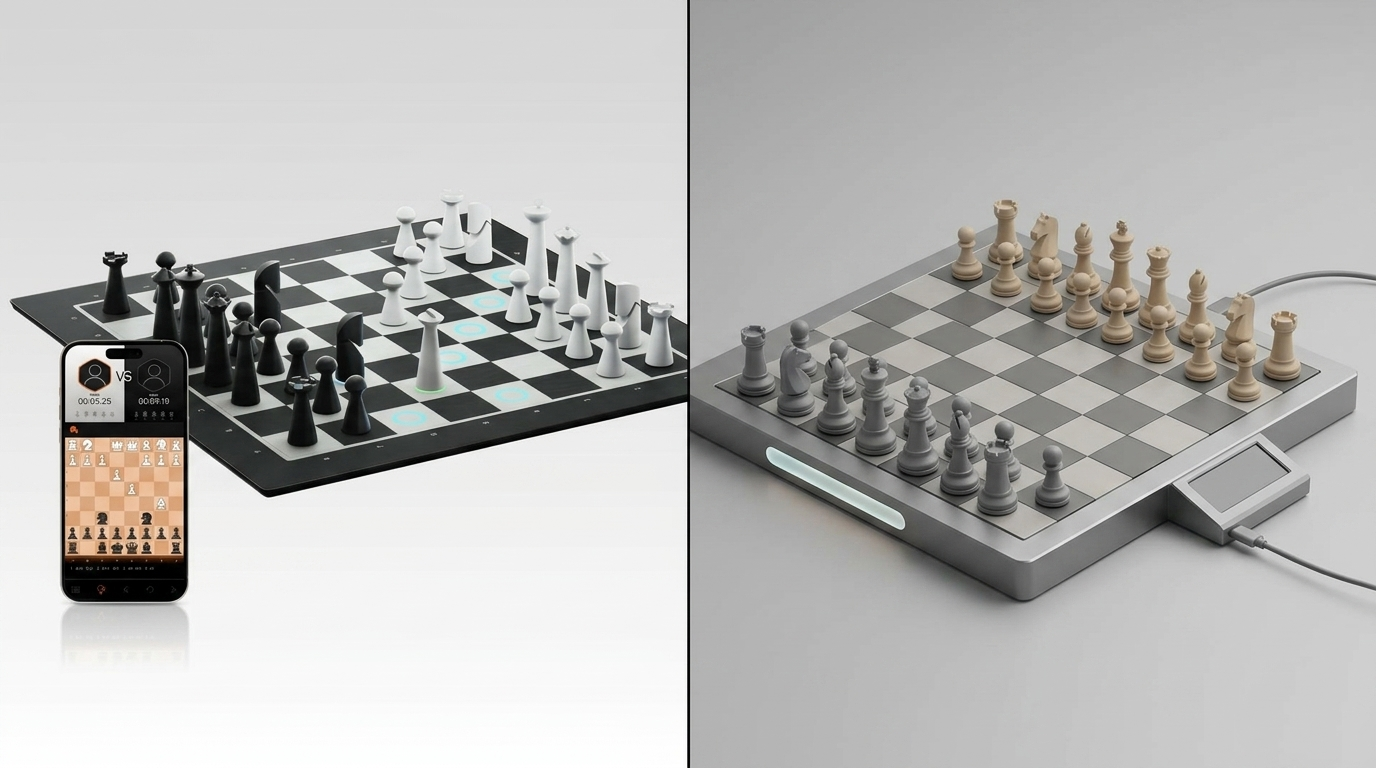
This difficulty in syncing everything is why we often default to just playing chess on a phone. GoChess was built to solve that specific friction. It’s essentially a piece of hardware designed to act as a bridge between the physical chess we love and the digital tools we actually need to improve.
By integrating the five pillars directly into the board, it removes the need to juggle multiple apps or devices.

1. Real Board Experience
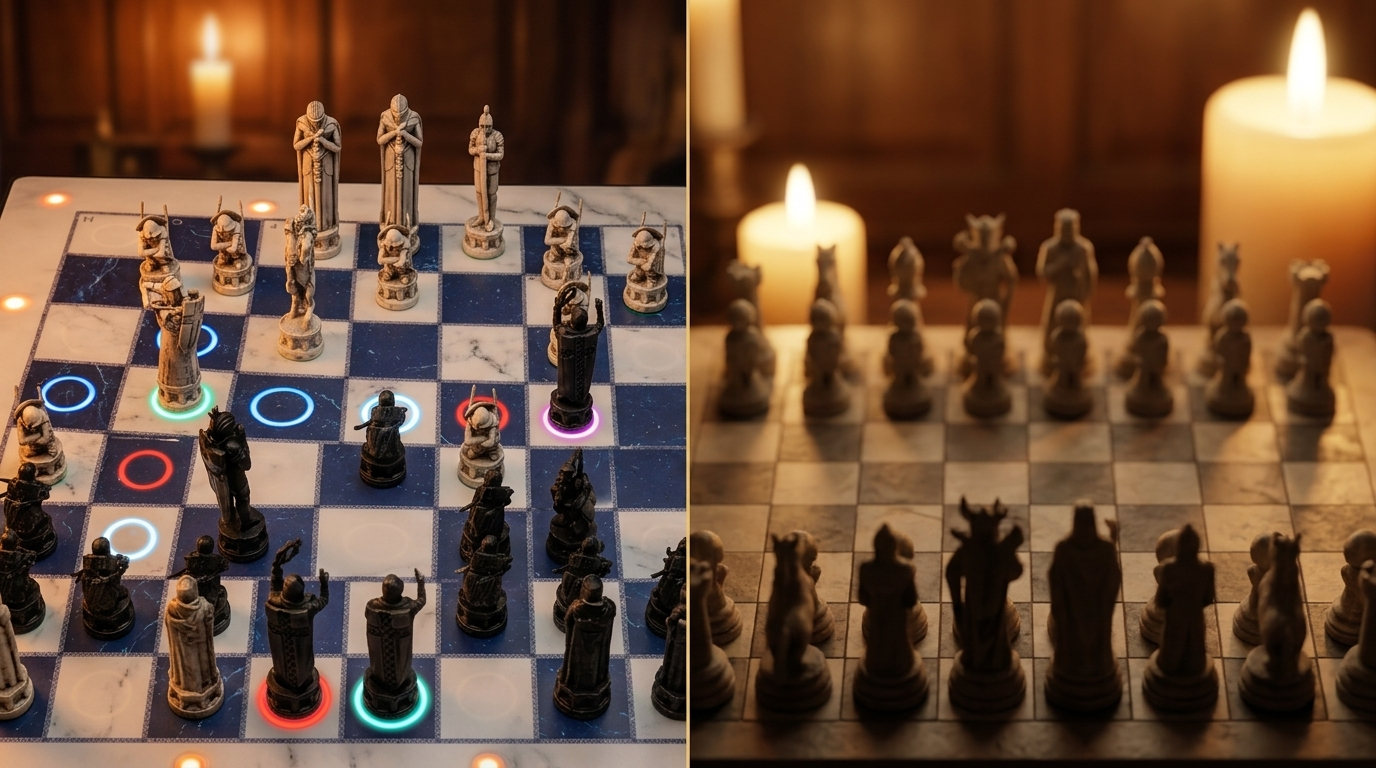
GoChess, being one of the best smart chessboards, is still a physical chessboard first. You play with real pieces on a real board, which makes practice feel more grounded, focused, and like proper over-the-board chess rather than one more screen habit.
2. Instant Feedback
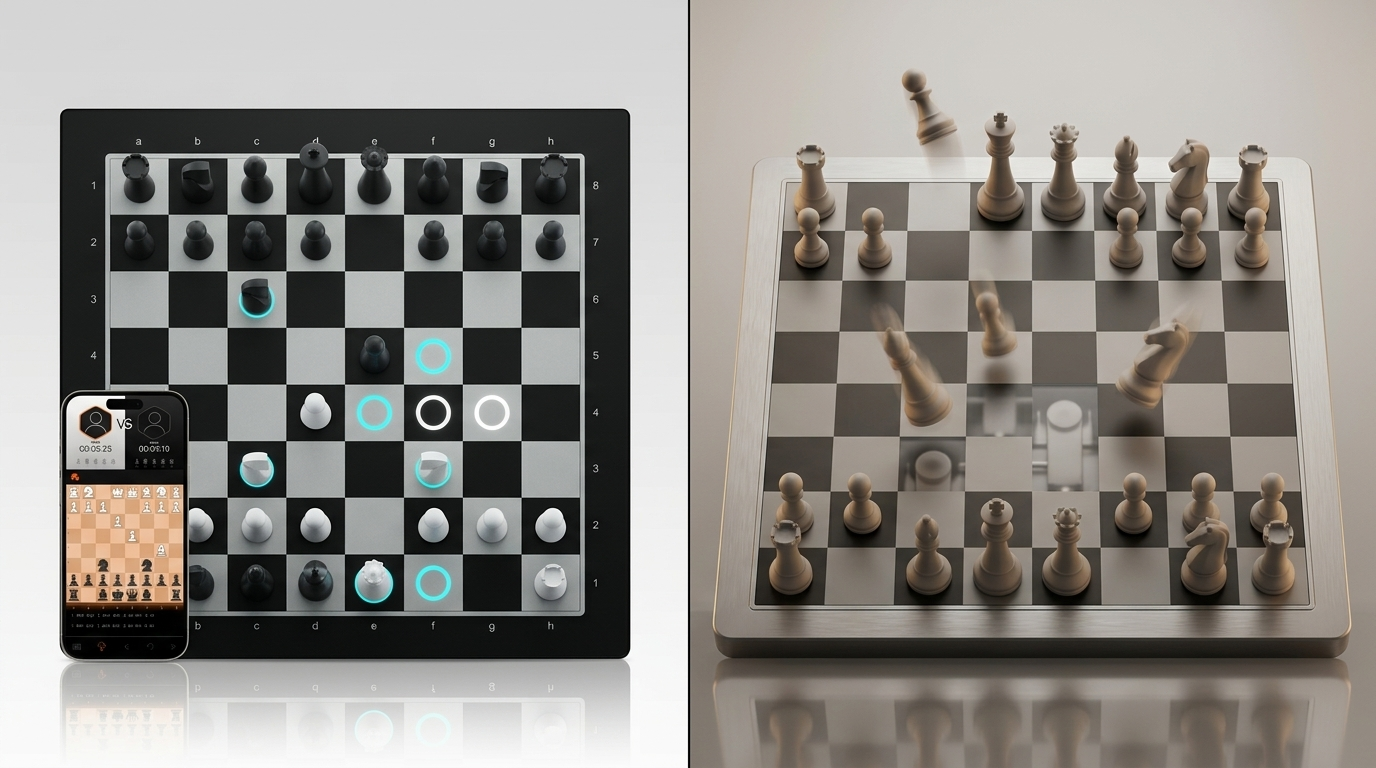
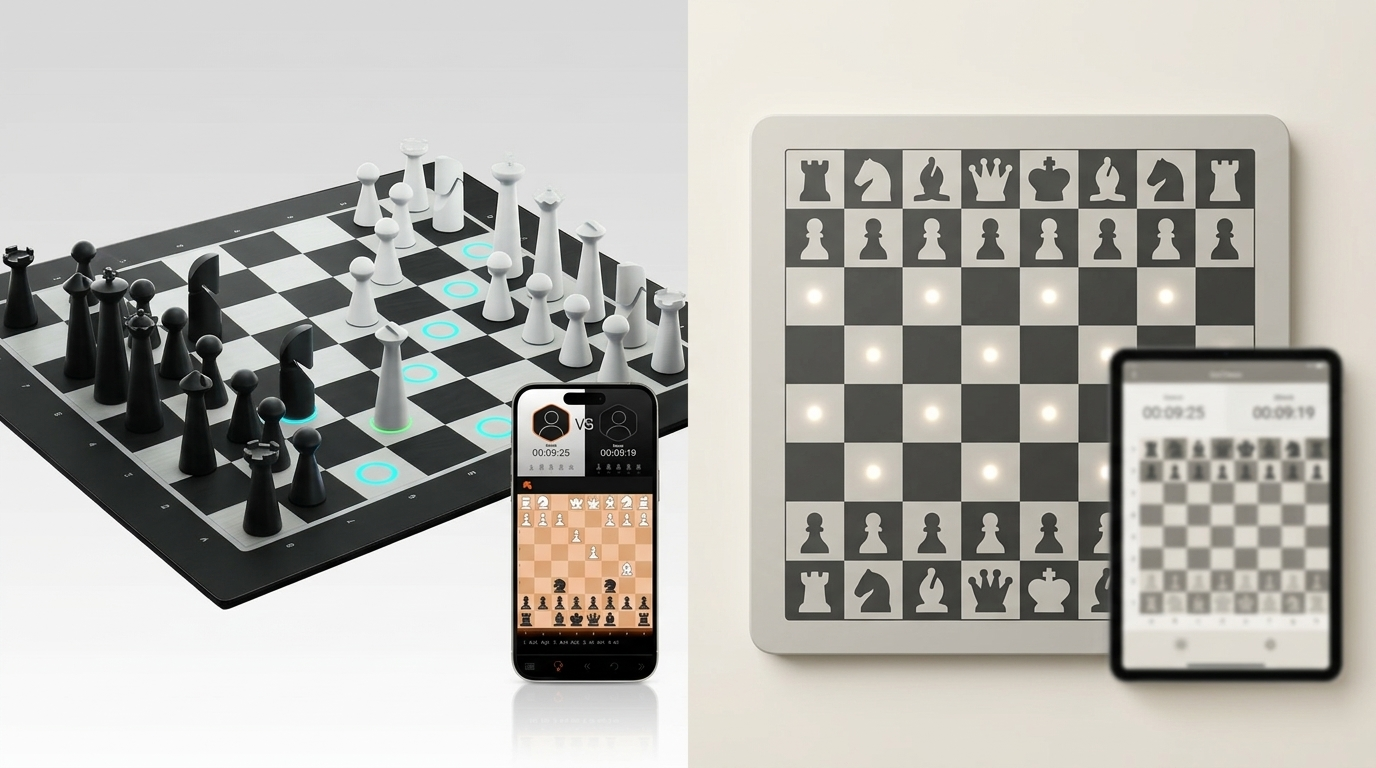
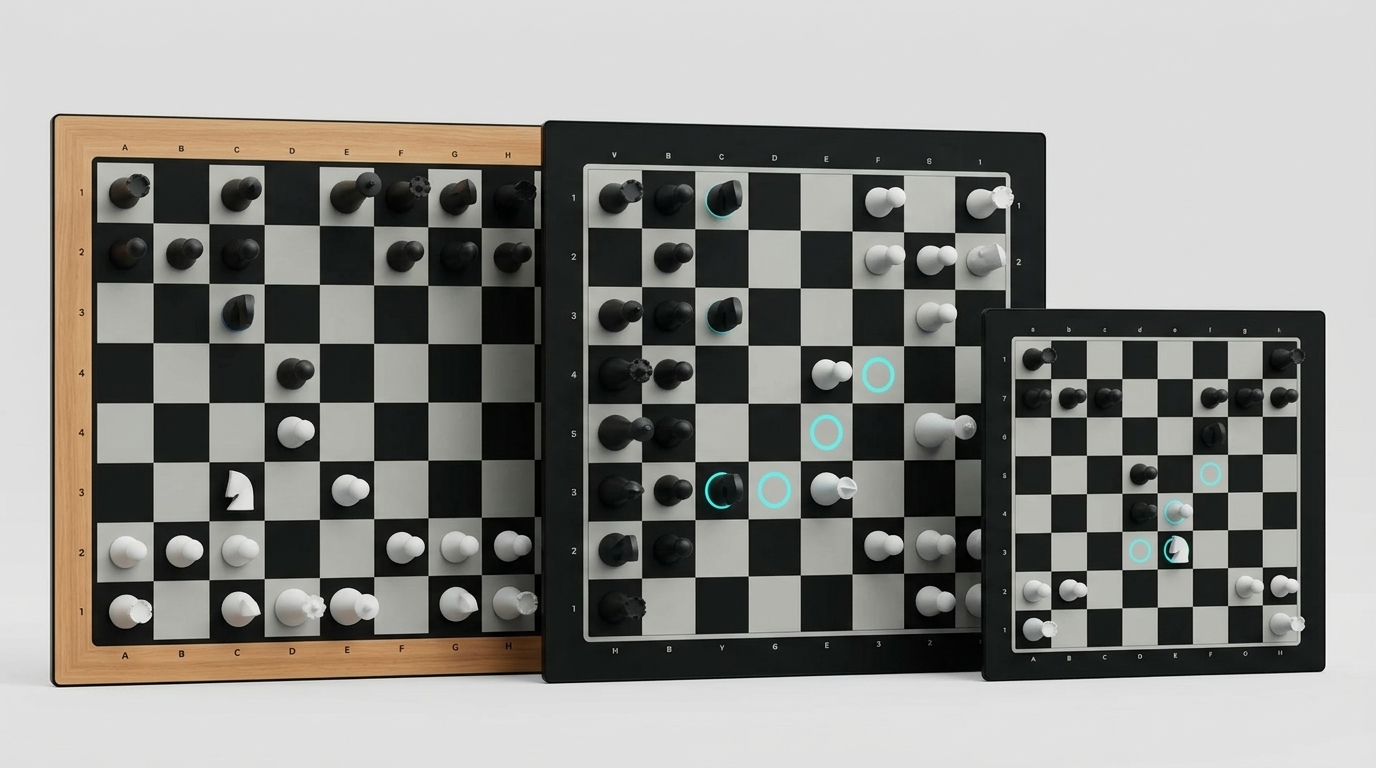
The most practical part of the setup is the LED lighting system. Legal moves, strong moves, best-piece suggestions, and blunder warnings all make feedback feel immediate instead of delayed. In practical terms, that is the easiest way to understand how GoChess AI works: the support appears on the board itself, right in the moment where the move still matters.
3. Varied Opponents
Finding the right level of challenge is usually a headache. The board connects to AI with 32 difficulty levels for controlled sessions, but it also links directly to Chess.com and Lichess. It allows you to play against the world while still touching real wood and felt.
4. Flexible Scheduling
The best practice routine is the one that actually happens. Because the tech is tucked inside the board, there’s no long setup process. If you have a spare twenty minutes, you can just sit down and play a high-quality game without needing to “prepare" your workspace.
5. Progress Tracking
Since the board "sees" every move you make, it handles the record-keeping for you. Every game is automatically logged and can be PGN exported for review. It turns your casual home games into a library of data, making it much easier to spot the recurring patterns that are holding you back.
When your board, your opponent, and your feedback loop are all in the same place, you stop "playing around" with different apps and start actually practicing.
Once the logistics are out of the way, the only thing left to decide is how you want to spend your time. Depending on your goals, there are three main ways this kind of setup typically fits into a home routine.
3 Ways to Practice Chess at Home with GoChess
For a home player, the hardest part is usually not access to chess. Chess is everywhere. The harder part is turning any of that into practice that feels clear, repeatable, and actually useful.
GoChess gives home players three especially useful ways to practice. And for anyone wondering who GoChess is for, these three personas answer that pretty clearly: home players who want more structure, more feedback, and a more realistic board experience without needing a coach for every session.
1. Solo Practice at Home Against AI
This is the most obvious home-practice win. No coach to schedule. No club to get to. No waiting for someone else to be free. You just sit down and play.
One recent Trustpilot reviewer wrote, “I’m a beginner, so I started against the board at level 1 of 32,” which is a very neat little proof of how the AI mode works at home: start where you can handle it, then build from there.

How it works
- You play against GoChess AI on a real board with physical pieces
- The board connects to the app via Bluetooth
- You can choose from 32 AI difficulty levels, which gives you space to grow inside the same setup instead of outgrowing the board as soon as you improve a little.
- The board tracks piece positions with magnetic sensors while the app manages the mode and controls
Why it works well at home
- You can start anytime without depending on another person
- It gives solo practice some structure instead of making it feel like filler
- It is much easier to build consistency when the setup is always there
Best for players who
- are beginners
- are rusty players getting back into chess
- try to practice more regularly at home
What it improves in a player
- playing confidence
- consistency
- move-by-move discipline
- comfort with real over-the-board play
2. Guided Home Practice to Catch Mistakes Earlier
A lot of home players do practice with others face-to-face. They just do not always practice in a way that corrects anything. GoChess is useful here because it makes home practice more guided, whether you are playing alone or face-to-face with someone at home. It does not wait until the damage is done to become helpful.
How it works
Depending on your settings, GoChess can:
- light up legal moves
- suggest a strong piece to move
- highlight a strong move
- warn you before a blunder is locked in
In one review, a user specifically praised “the lights, movement tracking, and guided play,” which is exactly the part that makes home practice feel less passive and much more corrective.

Why it works well at home
At home, the biggest thing missing is usually immediate feedback. No coach is sitting across from you telling you to pause and look again.
Over time, that also gives you clearer signals about progress: maybe you go from blundering a piece every other game to only doing it once in ten games, or from missing simple one-move tactics constantly to spotting most of them before you commit.
Best for players who
- know the rules but still hang pieces
- miss threats
- rush moves
- need help noticing patterns earlier
What it improves in a player
- blunder awareness
- threat-checking habits
- cleaner move selection
- faster pattern recognition
3. Playing Online from Home on a Real Board
Some players want stronger opponents, but do not want every serious session to feel like one more screen activity. Fair enough. After enough online chess, the whole thing can start feeling a little too digital.
This is where GoChess has one of its nicest home-practice angles.
How it works
- The board connects through the app
- You can play through Chess.com and Lichess
- You still move real pieces on a physical board while playing real opponents online
Why it works well at home
- You get stronger competition without leaving the house
- You keep the over-the-board feel instead of playing entirely on a screen
- It makes serious practice at home feel more like real chess and less like another app session
Reviews of chess boards with integrated technology often point to that hybrid advantage: you keep the tactile feel of real-board chess while still getting AI guidance, online opponents, and app-based support in one home setup.
Best for players who
- want more challenge than AI alone
- already use online platforms
- like real-board play and do not want to lose that feeling
What it improves in a player
- adaptation to less predictable opponents
- decision-making under pressure
- competitive sharpness
- real-game focus
In one hands-on review, the writer said that sitting on the couch with the GoChess Lite on the coffee table while playing an opponent online with a physical board was simply great. Which is a very fun way of saying this mode brings real board chess into modern home life without making it feel screen-heavy.

Practice Chess Smarter, Not Just More
Home chess practice does not fail because people are lazy. It fails because most setups are fragmented. A little content, a little effort, a little good intention, and not always a system that turns any of it into real improvement.
That is what makes GoChess so useful. It brings the board feel, the feedback, the flexibility, and the practice structure into one place, which makes it much easier to keep showing up and actually getting better.
Because in the end, the best home chess setup is not the one with the most features. It is the one you will actually use, repeat, and improve with.
For current product details, see GoChess Lite Modern. Check the official listing for current availability and supported features before choosing.
Frequently asked questions
Can GoChess Lite Modern support solo chess practice at home?
Yes. Its official listing includes an AI mode with 32 AI levels, giving home players a range of computer opponents for solo practice.
Can two people play face to face on GoChess Lite Modern?
Yes. Face-to-face play is one of the modes named on the official product page, so two players can keep a physical chess game at the center of the session.
Does GoChess Lite Modern provide guidance during practice?
Yes. The official product details describe light guidance, which can support a player who wants help while continuing to make moves on the board.
Can GoChess Lite Modern be used for online play?
Yes. Online play is included among the verified modes on the official listing. Check the current product page before buying for the latest supported experience.