


Updated July 2026
Playing chess online is undeniably convenient, but it solves one problem only to create another. Sure, you can play a friend in Tokyo while sitting in your pajamas in Toledo, but clicking a mouse or stabbing a glass screen feels like a notification you are answering. You get the strategy, but you lose the soul and that satisfying clack when you nail a winning move.
That’s where smart chess boards come in to save the day. The right board lets you play someone across the globe while moving real pieces at home, making remote chess feel smooth, natural, and actually personal. The wrong board? That just turns a relaxing game into a frustrating tech support nightmare
This guide breaks down the best boards specifically built for remote play. We’re skipping the boards that just happen to exist and focusing on the ones actually designed to make long-distance games feel like the real thing.
What Actually Matters in a Chess board for Remote Play
The term “smart chessboard” is a bit of a catch-all. Some boards are designed to be your AI tutor, while others are basically fancy light-up boards for solo practice. But when you want to play a friend in another zip code, most of those bells and whistles don't matter. What matters is connection.
For a board to be great for remote play, it needs to disappear into the background so you can focus on the person you're playing with. We evaluated these boards based on a few non-negotiable pillars:
- Platform Compatibility: Does it play nice with the "big two" (Chess.com and Lichess)?
- Human-to-Human Friction: How many menus do you have to click through to actually start a game with a friend?
- Reliability: Does it mirror your opponent’s moves instantly, or are you left wondering if they resigned or if your Bluetooth just died?
- The Real Board Feel: Does it feel like a premium chess set, or just a plastic accessory for your iPad, or even if it is marketed as the best chess board for beginners?
Quick Match Guide: Which Remote-Play Board Fits You?
To help you skip the manual-reading and get straight to the match, here is how the top contenders stack up for different types of remote play:
|
If you want… |
Pick this |
Why it fits |
|
The best all-round remote-play board |
GoChess, DGT Pegasus, Millennium eONE |
GoChess has the strongest balance of online play, real-board feel, and easy app-led features. Pegasus is very friend-play focused, while eONE is especially strong if online chess is your main priority. |
|
A customizable, software-heavy remote setup |
Certabo, GoChess, DGT Pegasus |
Certabo makes the most sense for players who like a more connected, software-driven ecosystem. GoChess is the more polished mainstream option, while Pegasus keeps things online-focused without leaning quite as technical. |
|
A foldable modern board for online games |
iChessOne, Chessnut Go |
iChessOne stands out for its modern foldable design and direct online-play positioning, while Chessnut Go is the more compact travel-style option |
|
A board especially focused on playing with friends |
Millennium eONE, DGT Pegasus, GoChess |
Their official apps are explicitly designed to make challenging a specific friend straightforward. |
|
A compact travel-friendly connected board |
Chessnut Go, iChessOne, GoChess Mini |
Chessnut Go is the most obvious portable pick here, built around a smaller connected format. iChessOne and Gochess Mini also bring portability into the conversation. |
|
A board especially focused on online friend play |
DGT Pegasus, GoChess, Millennium eONE |
DGT Pegasus earns this slot because its app copy is especially direct about playing online against a friend. GoChess is still one of the safest picks for friend matches overall, and eONE is a strong option for players who want online chess to be the main event. |
Narrowing it down by category is the quickest way to find your match, but the devil is often in the details of the setup. Below, we dive into the specifics of each board to see how they actually handle a game when the pressure is on, and your opponent is miles away.
6 Best Chess Boards for Remote Play with Friends
1. GoChess
Best for: Players who want a balanced remote-play board that also gives them room for AI practice, local games, and long-term everyday use.

Remote-play category: all-round remote-play board
GoChess is a highly sophisticated, widely considered one of the most deeply capable and best smart chessboards on the market, which is built around a simple idea: real over-the-board chess with a much more intelligent layer on top. It supports three core play modes: face-to-face, online, and vs. AI, which makes it a very natural fit for people who want a remote-play board that still feels useful when they are playing a friend.
With real-time light indicators, hints and alerts, a free companion app, Chess.com and Lichess connectivity, progress tracking, daily puzzles, and 32 AI difficulty levels from 400 to 3000 ELO, it offers a well-rounded connected experience without feeling too narrowly focused on one use case, especially for players curious about how GoChess AI works in real games and guided training.
What the remote-play setup looks like
- The board acts as the physical input layer, so you play by moving real pieces on the board rather than tapping moves on a screen.
- The GoChess app handles the connected side of the experience, including mode selection, AI coaching settings, and game management.
- Online play is supported through the same core setup, with Chess.com and Lichess compatibility built into the broader connected experience.
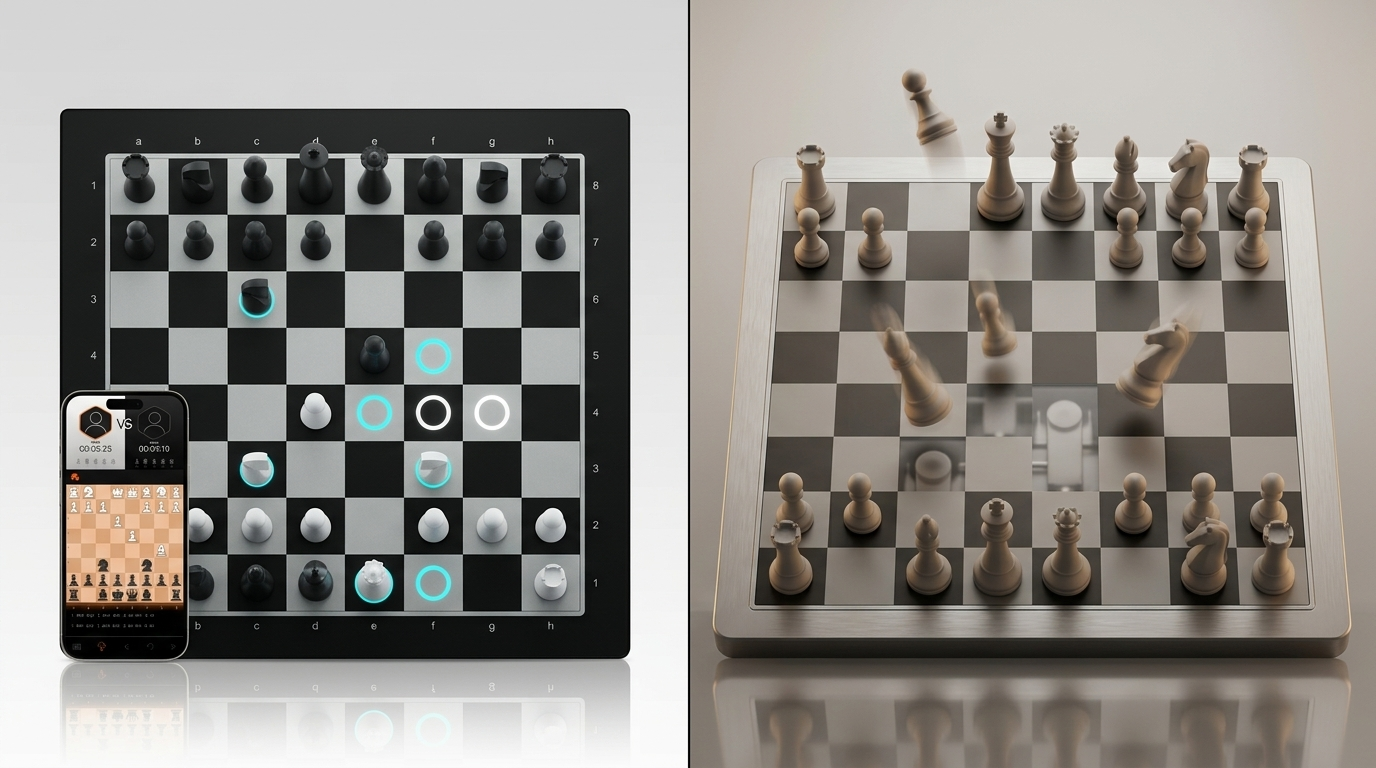
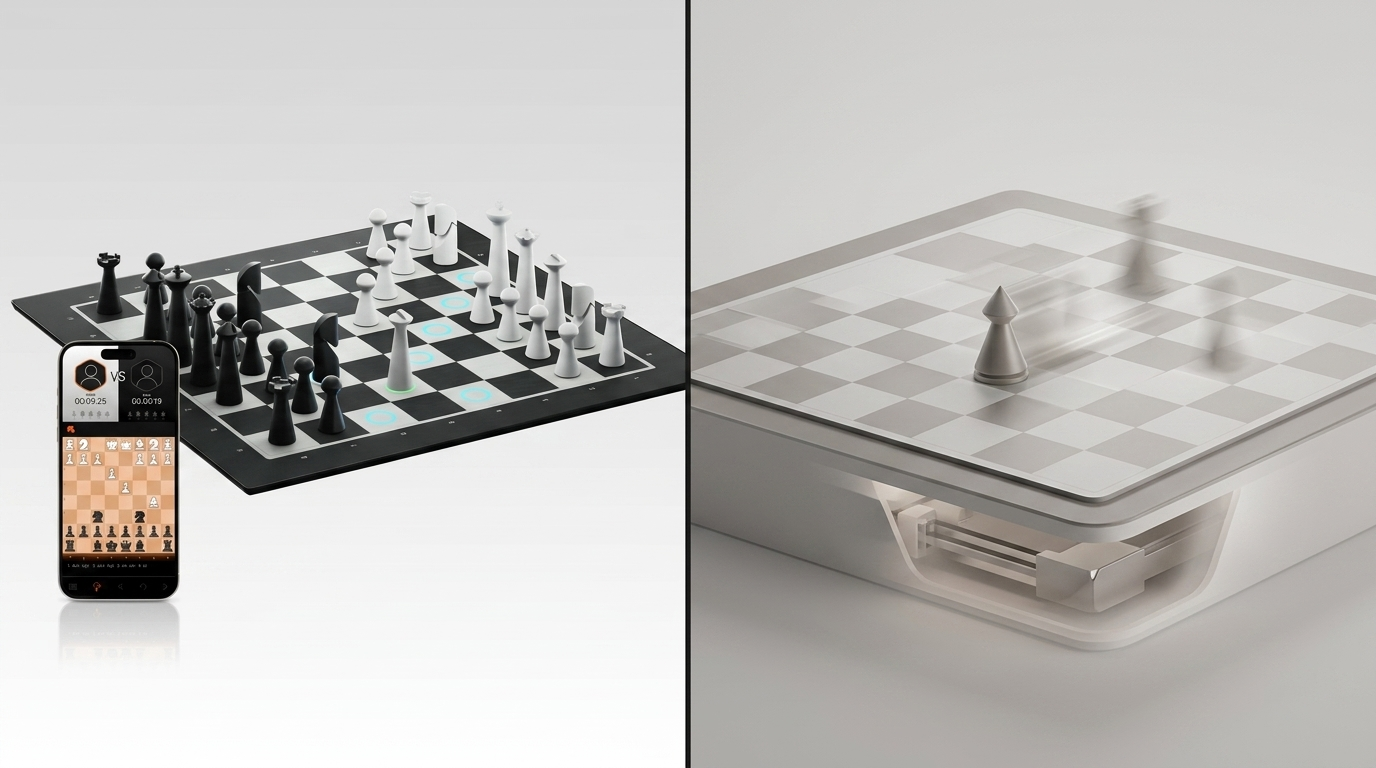
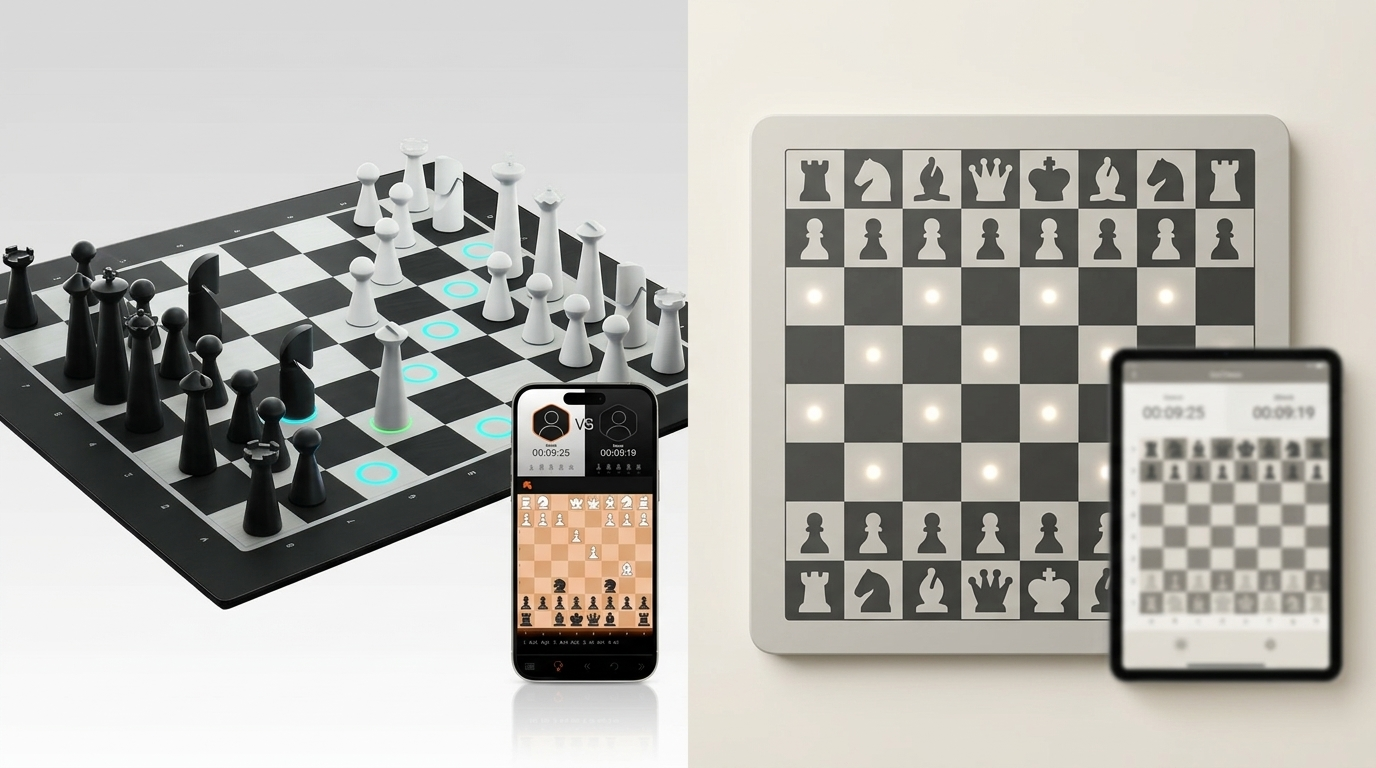
- LED indicators on the board help show move feedback directly on the squares, which makes remote games feel more natural and easier to follow.
- Once the game ends, the app offers instant analysis and the ability to export games as PGN or FEN files, allowing you to dive into the "why" behind your moves just like you would on a desktop.
Things to check
It is a connected, feature-rich setup, so it works best if you actually want the full smart-board experience and do not mind using the GoChess app.
Approximate price
GoChess Lite Modern: ~$299.95
GoChess Mini: ~$249.95
GoChess Lite Classic: ~$349.95
Prices can also shift slightly depending on promotions or sales.
2. Certabo
Best for: Players who want a more software-driven remote-play setup and do not mind a slightly more technical experience in exchange for flexibility.

Remote-play category: customizable connected-play board
Certabo is a deeply software-oriented smart chessboard built for players who like the idea of a connected board ecosystem with a bit more flexibility behind it. It uses direct play on Lichess through the official Lichess API, and the brand has long positioned the board around online integrations rather than a purely self-contained experience. That makes it a very natural fit for players who care less about a polished plug-and-play feel and more about having a board that leans into connected chess in a more technical, configurable way.
What the remote-play setup looks like
- The board works as the physical playing surface, while Certabo’s software handles the connected side of the game.
- It offers direct Lichess play through the official API, which gives the board a clear online-play identity.
- The setup makes the most sense for players who enjoy connected chess tools and do not mind a more software-led workflow.
- In practice, Certabo feels less like a casual “just open the app and go” board and more like a connected chess environment for players who like options when they practice chess at home, as well as play remotely.
Things to check
It is better to think of Certabo as the flexibility-first option, not the simplest one. If you want a remote-play board with a slightly more technical personality, it makes a lot of sense. If you want the least setup friction possible, another option may feel more natural.
Approximate price
€459.90 to €509.90, depending on the board size, wood finish, bundle, and any current sales.
3. iChessOne
Best for: Players who want a modern, foldable board that puts app-connected online play and portability at the center of the experience.

Remote-play category: foldable modern remote-play board
iChessOne is a sleek, modern smart chessboard built around portability, app connection, and a more contemporary product concept. The board connects through Bluetooth Low Energy and supports online play on platforms such as Lichess and Chess.com, including real-time and correspondence games. The company also positions it as a foldable electronic chessboard designed for natural play on a real board, which makes it especially appealing for players who want remote chess to feel clean, current, and easy to live with.
What the remote-play setup looks like
- The board connects wirelessly to the iChessOne app through Bluetooth Low Energy.
- The app supports online play on Chess.com and Lichess, including real-time and correspondence games.
- Physical moves are recognized on the board and synchronized through the app, so the experience stays tied to real pieces rather than pure screen input.
- The same app also supports training, analysis, board management, and customization, so the setup stays useful between friend matches, too.
Things to check
iChessOne makes the most sense if you like its foldable, app-first identity. It is a strong fit for players who want something modern and portable, but less so for anyone specifically chasing a classic display-board feel.
Approximate price
Around $740 to $760, depending on the retailer and sales.
4. Millennium eONE
Best for: Players who care most about online chess itself and want a board that feels purpose-built for that job.

Remote-play category: online-chess-first board
Millennium eONE is one of the clearest remote-play products in this category because of the simple reason: it’s an electronic chess board specially designed for players who like to play online chess and want to get back the real, authentic game feeling. That positioning fits this use case almost perfectly. It offers compatibility with Lichess, Chess.com, and Tornelo, which makes the eONE especially appealing for players who are buying a physical board mainly because they want online chess to feel more like actual chess again.
What the remote-play setup looks like
- Moves are entered on the electronic sensor board using real pieces.
- Those moves are sent in real time via Bluetooth or USB to compatible apps, online platforms, or chess programs.
- The board is officially listed as compatible with Lichess, Chess.com, and Tornelo.
- Opponent moves are displayed directly on the board with lights around each square, which helps keep the game board-led instead of screen-led.
Things to check
eONE is ideal if remote play is the reason you are buying. It is a very clean match for players who want online chess first, while broader coaching features and “smart board lifestyle” extras matter less to them.
Approximate price
Around $169, depending on the seller and any current sales.
5. Chessnut Go
Best for: Players who want connected play in a compact board that is easy to pack, store, and carry.

Remote-play category: compact travel-friendly remote-play board
Chessnut Go is a compact connected chessboard built around portability and convenience. It’s an ultra-portable smart chessboard with full piece recognition, magnetic pieces, and a travel case, while the broader Chessnut app ecosystem supports online play and challenging friends. That makes it a very good fit for players who want remote play in a smaller format they can carry easily, rather than a board that stays on one table full time.
What the remote-play setup looks like
- The board connects to your smartphone and works through Chessnut’s connected app ecosystem.
- You can challenge friends online and play against engines through the real board.
- The board uses upgraded full piece recognition, which helps keep remote games smoother and more natural to follow.
- Because the board is ultra-thin and built for travel, the whole remote-play setup is especially appealing for players who want connected chess away from a permanent home setup.
Things to check
This one makes the most sense if portability is a major part of the appeal. It is a connected board with clear online-play usefulness, but its identity is more “small, practical, and easy to carry” than “fully centered on remote friend play above all else.”
Approximate price
Around $150 to $200, depending on the store and any current sales.
6. DGT Pegasus
Best for: Players who mainly want to sit down at a physical board and play online games with friends in a way that feels direct and purpose-built.

Remote-play category: friend-match-first remote-play board
DGT Pegasus is one of the clearest online-friend-play boards because DGT says so very plainly. It offers playing online against a random opponent, playing online against a friend, choosing rated or unrated games, and playing against the Lichess AI. DGT Pegasus is a real chessboard dedicated to online play, and you can play on your favorite chess platforms against old or new friends without using any screens. That makes the product especially easy to position for buyers who care most about remote play itself.
What the remote-play setup looks like
- The DGT Chess app handles the online side of the experience.
- You can play online against a friend, play online against a random opponent, and choose rated or unrated games.
- DGT also offers support for play on favorite chess platforms and mentions Chess.com among connected app options.
- The product is explicitly framed as a real chessboard dedicated to online play, which keeps the remote-play purpose very clear from the start.
Things to check
Pegasus makes the most sense for people who care very specifically about online chess with other humans. If your priority is friend matches and remote play itself, it is a very direct fit. If you want a board that leans more into coaching, broader training features, or a wider smart-board toolset, another option may suit you better.
Approximate price
Around $205 to $240, depending on the seller and any current sales.
Before You Buy: What to Look for Beyond the Feature List
A board can look like it belongs in a grandmaster’s study and still be a headache in real life. Remote play gets old quickly if every match starts with a 10-minute reconnection ritual. Before you pull the trigger, consider these "quality of life" factors:
1. The connection ritual
How does the board actually talk to the internet? Some boards, like GoChess and Millennium eONE, are built for a streamlined app experience. Others might require a bit more "tech-savviness" to bridge the gap between the hardware and the server. If you want to play a quick 10-minute game, you don't want a 5-minute setup.
2. Piece recognition vs. move indicators
- Piece Recognition: Boards like Chessnut Go and GoChess know exactly which piece is which. If you accidentally bump the board, it knows where the pieces should be.
- Move Indicators: In remote play, how do you see your friend's move? Look for boards with LED indicators (like the eONE or GoChess). Moving your hand to a light on the board is much more natural than having to look at your phone screen every thirty seconds.
3. App ecosystem vs. direct API
Do you want to be tied to a specific brand’s app, or do you want to play directly on Lichess?
- App-heavy boards (GoChess, DGT Pegasus) offer a more guided experience with coaching and extra features.
- Direct-connect boards (Certabo) are for the purists who want the most "raw" connection to the chess server possible.
4. Portability vs. presence
Ask yourself: Is this board going to be the centerpiece of your office, or is it going in your backpack?
- If it's staying put: Go for a premium weighted set like GoChess Lite Classic.
- If you're a "digital nomad" player: The Chessnut Go or iChessOne (foldable!) are your best bets.
Pro Tip: Always check your phone's Bluetooth version. Most modern boards use Bluetooth Low Energy (BLE). If your phone or tablet is more than 5-6 years old, you might experience lag that has nothing to do with your chess skills and everything to do with your hardware.
Checkmate the Screen, Keep the Chess
Remote chess works best when it stops feeling remote.
That is really the whole point of this category. You are not buying a smart board just to own a smart board. You are buying one because you want long-distance chess to feel more like actual chess again, with real pieces, real rhythm, and a little less screen fatigue between you and the game.
Ultimately, the right choice for you depends on how you want that connection to feel. You might prioritize a board that folds up for travel, one that focuses purely on a streamlined online connection, or a heavy, premium set that stays on your desk as a permanent fixture.
These boards succeed when the technology finally disappears. When the connection is stable, the move indicators are intuitive, and the pieces have the right weight, you stop thinking about "smart features" and start thinking about your next move. That is the moment remote play finally feels real.
For current product details, see GoChess Lite Modern. Check the official listing for current availability and supported features before choosing.
Frequently asked questions
Does GoChess Lite Modern support online play?
Yes. Online mode is included in the verified feature set on the official GoChess Lite Modern product page. Check the current listing for the latest description of that mode when evaluating the board for remote games.
Can GoChess Lite Modern also be used for face-to-face games?
Yes. Face-to-face play is one of the modes named on the official GoChess Lite Modern listing. Choosing it for online mode therefore does not limit the board to games played with someone in another location.
Does GoChess Lite Modern offer guidance during a game?
Yes. Light guidance is included in the board's verified feature set on the official product page. The current listing is the right place to confirm the latest feature description before deciding whether that level of guidance suits you.
Can you practice alone between remote games?
Yes. GoChess Lite Modern includes AI mode with 32 AI levels according to its official listing. That gives a player a verified solo option in addition to the board's online and face-to-face modes.