

Updated July 2026. Smart chess boards now cover several genuinely different experiences: some teach through lights, some recognize every piece, some put lessons on the board, and others serve established electronic or tournament workflows. This guide compares those jobs using official product information checked on 2026-07-18. Particula makes GoChess, so its ownership interest is stated plainly. Prices, integrations, warranties, and availability can change.
Which smart chess board is best in 2026?
There is no universal winner. GoChess Lite Modern suits players who want light-guided coaching and several play modes; ChessUp 2 favors an on-board touchscreen and lessons; Chessnut Air favors full piece recognition in wood; DGT remains strongest for buyers entering an established electronic and tournament ecosystem.
The useful first question is not “Which board has the longest specification list?” It is “What should happen after I put the pieces down?” A beginner may want the board to flag legal moves or offer a hint. An online player may care most about a stated platform connection. A club organizer may value a mature electronic-board range. Someone captivated by pieces moving on their own is shopping in the robotic category, not merely for a connected board.
That distinction prevents an expensive mismatch. Coaching lights, full piece recognition, a self-contained screen, tournament-oriented interfaces, and automated movement solve different problems. A board can be excellent at one of them without being the right purchase for a household that really needs another.
Think through three ordinary sessions before choosing. In the first, a learner practices against an AI level. In the second, two people share the same room. In the third, someone plays through an online service. The best board is the one whose verified features support the sessions that will actually happen, with an interface the player is willing to keep using.

What separates GoChess Lite Modern from the other choices?
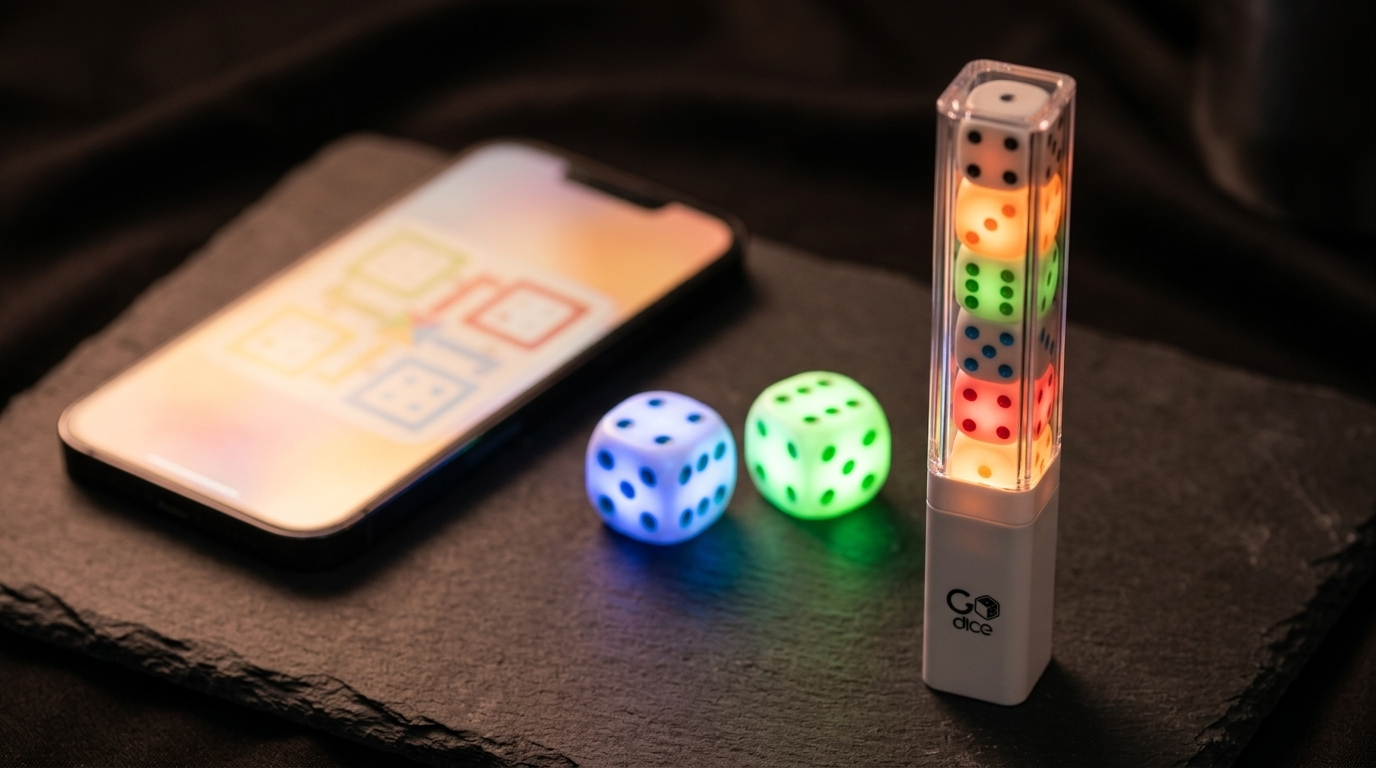
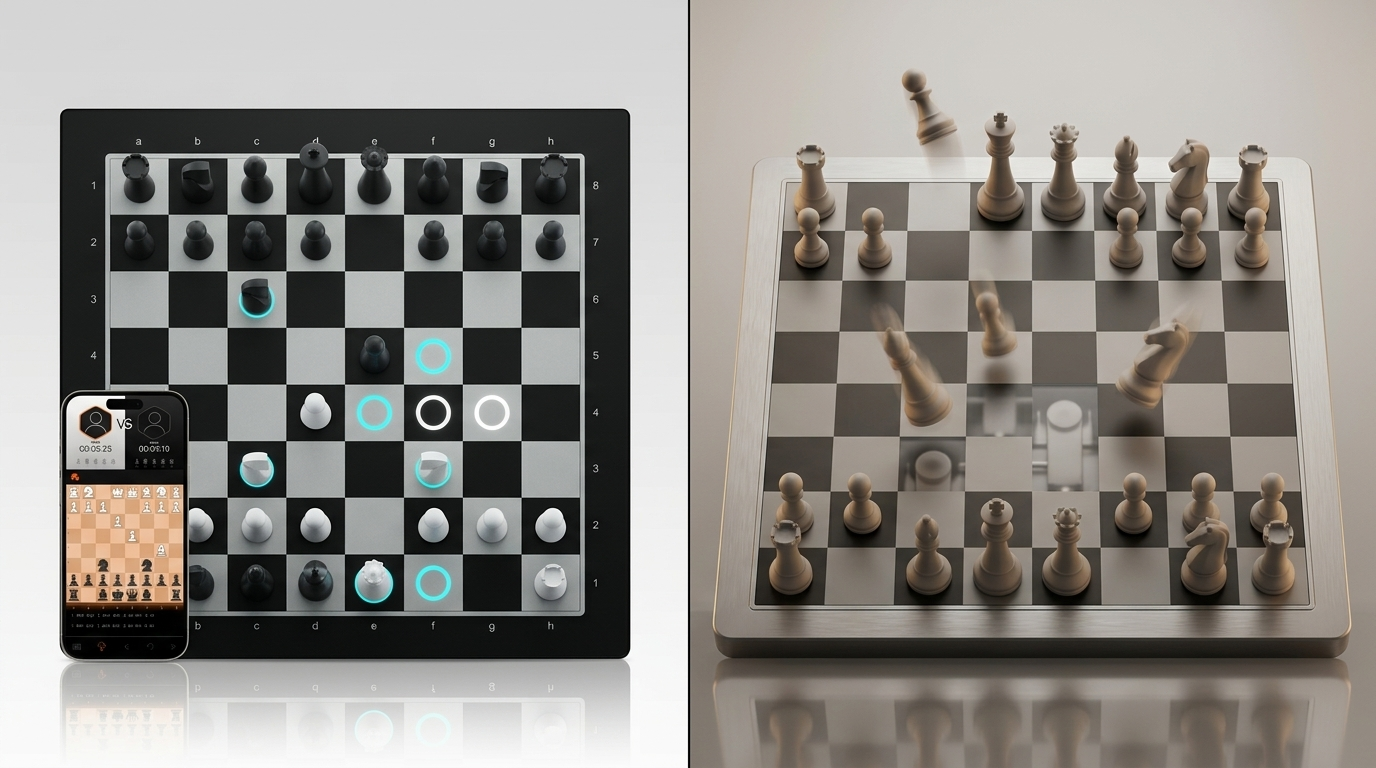
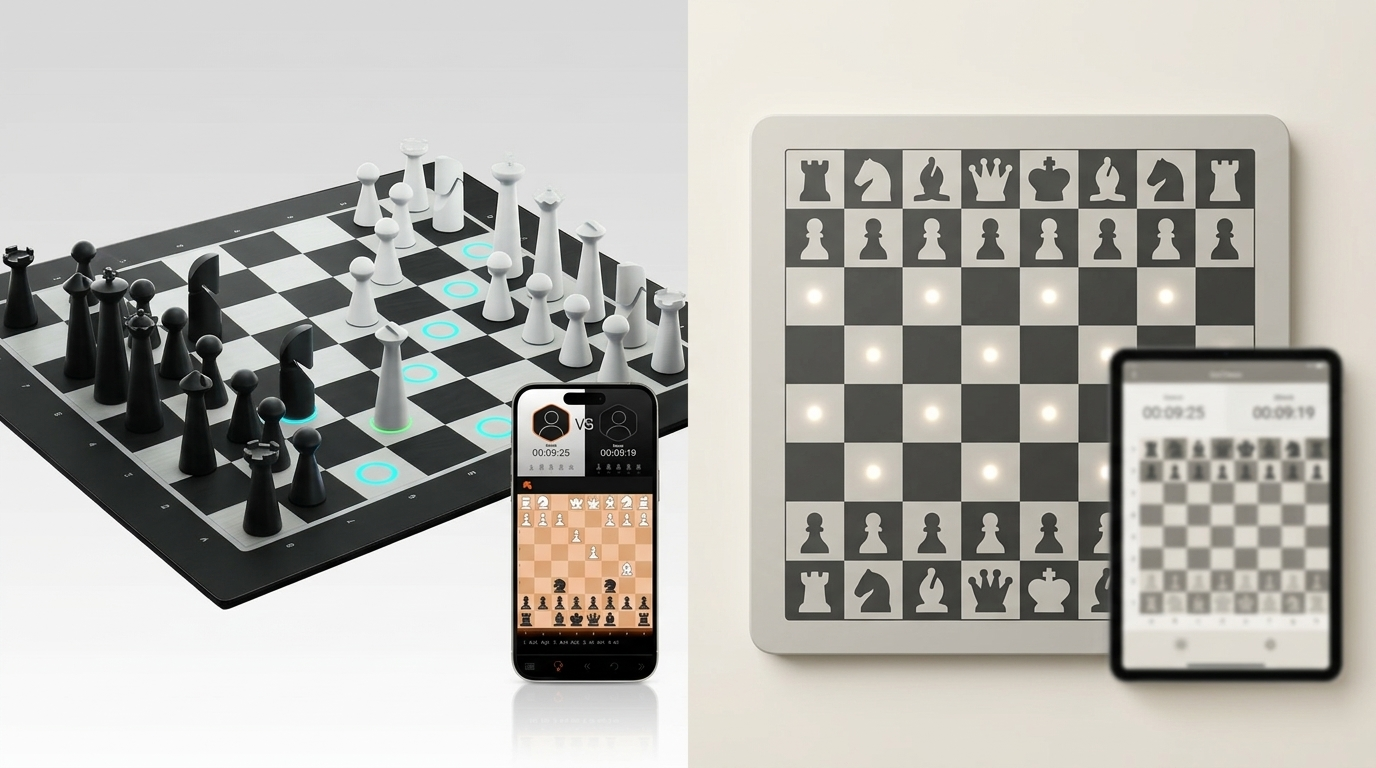
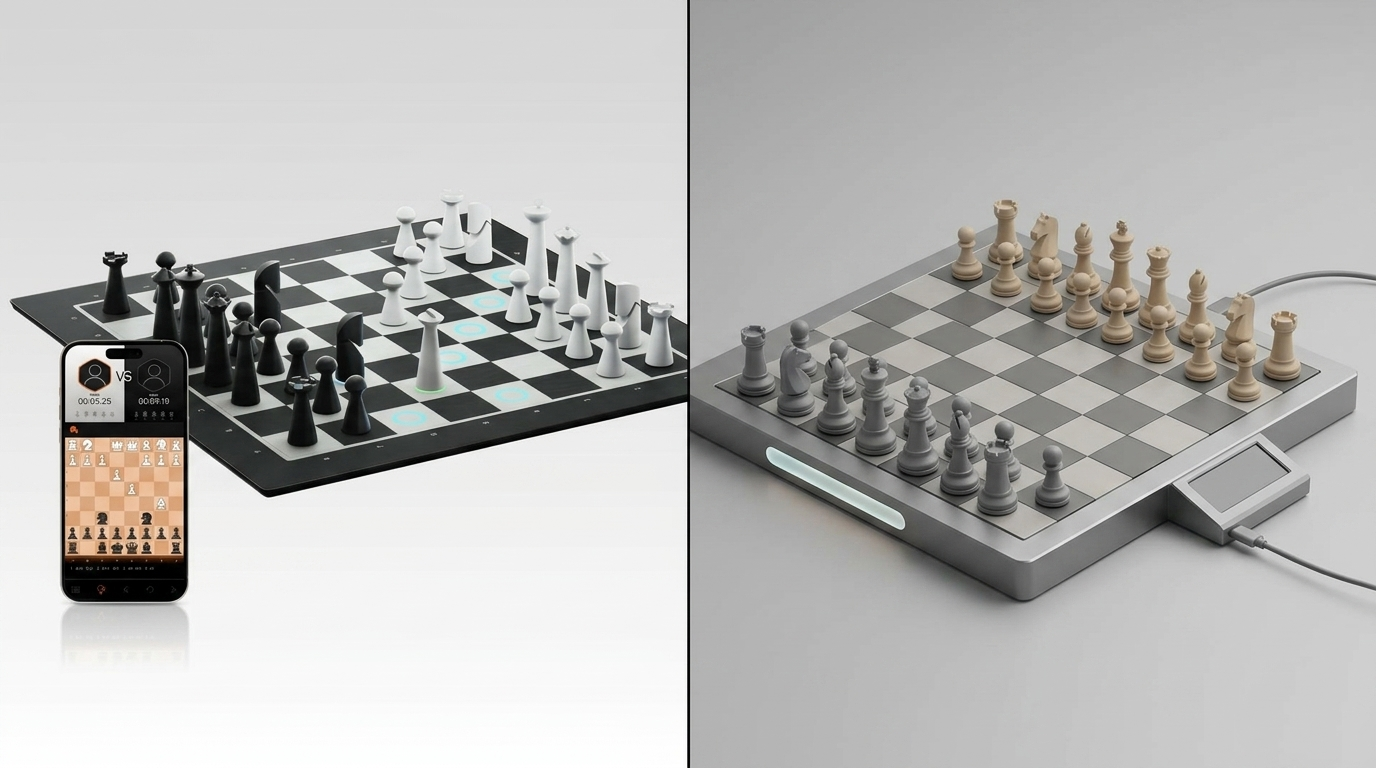
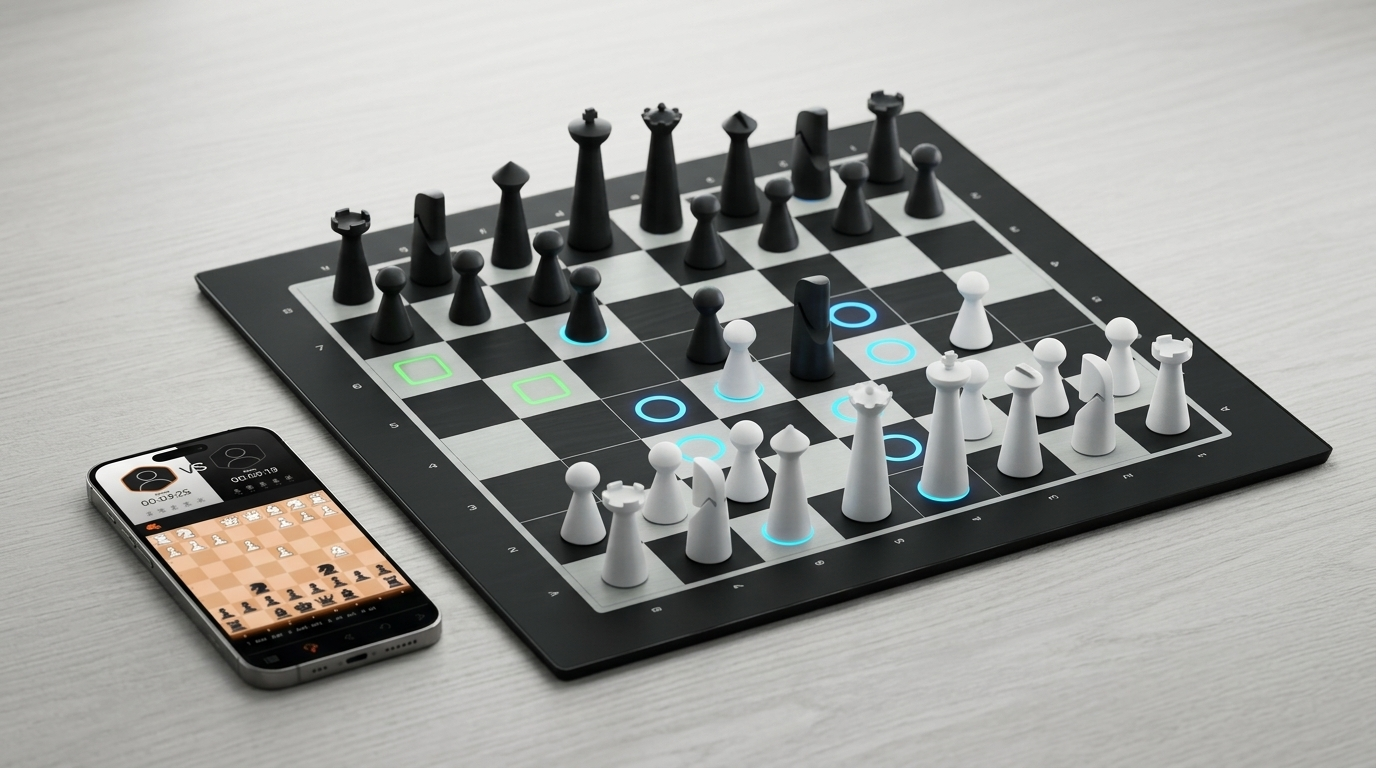
GoChess Lite Modern centers the experience on real-time board lights for legal moves, hints, and alerts. Its official listing also states face-to-face, online, and AI play, 32 AI levels, Bluetooth app connectivity, Chess.com and Lichess compatibility, and a one-year warranty. It does not move pieces.
Particula makes GoChess. As of 2026-07-18, the official GoChess Lite Modern listing showed a $269.95 sale price and $299.95 regular price, with 32 pieces and two extra queens. Those dated details put it between Chessnut Air and ChessUp 2 on the prices verified for this guide, but price alone does not decide the fit.
Its clearest case is a learner who still wants a recognizable physical chess session. The lights can make feedback visible on the squares while the pieces remain in the player’s hands. The app and integrations add connected play, but the central interaction is still making the move yourself. That is materially different from buying a board mainly to watch an opponent’s remote move travel across the table.
The 32 listed AI levels also make more sense as a range to explore than as a promise of improvement. Their value depends on whether the player returns, changes the level deliberately, and learns from the light-guided information. Buyers should judge the full practice routine rather than treating a larger number as proof that the hardware will teach by itself.
When is ChessUp 2 the stronger choice?
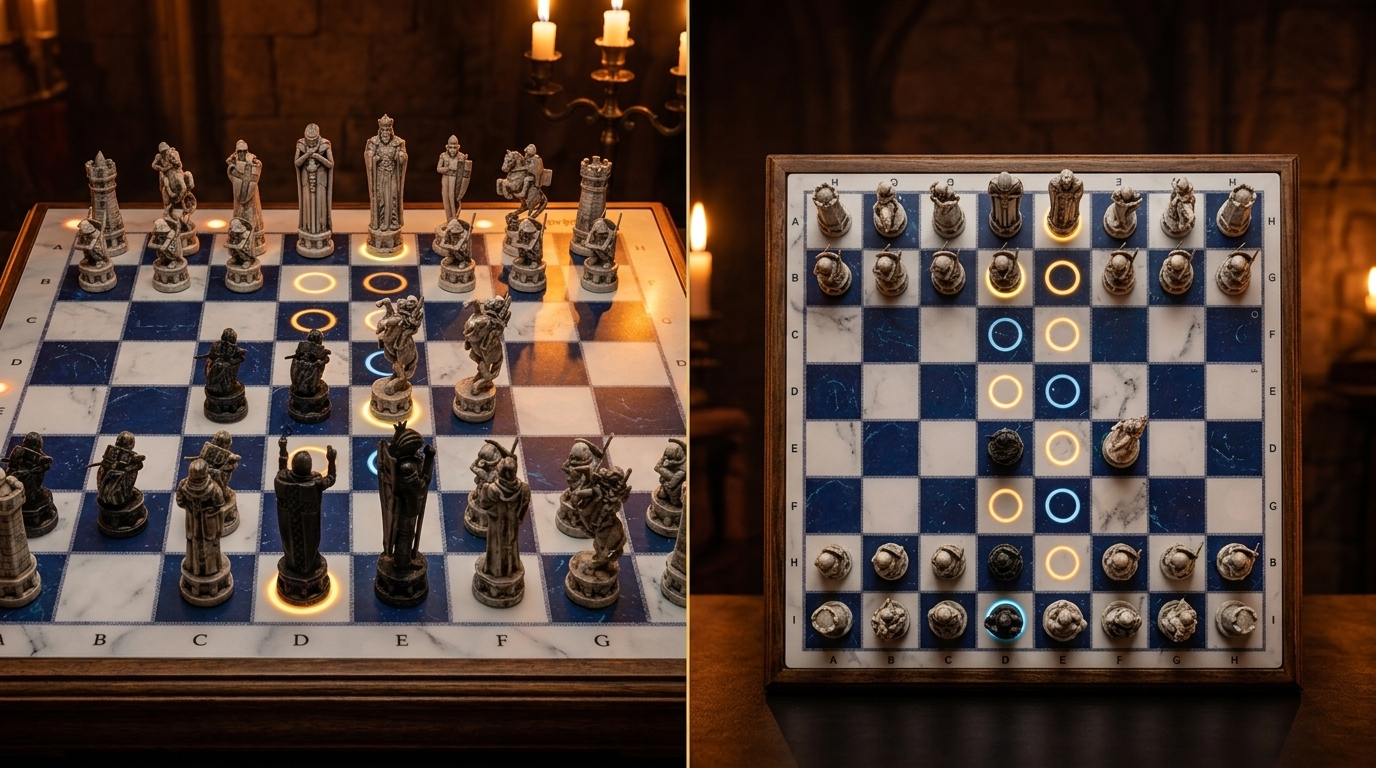
ChessUp 2 is the stronger candidate when a built-in color touchscreen, structured lessons, Stockfish feedback, and official Chess.com support matter more than GoChess’s app-led approach. Its official page listed a six-hour battery and a $349.99 sale price, versus $399.99 regular, when checked on 2026-07-18.
The self-contained interface is its defining advantage in this comparison. A learner can value seeing information on the board rather than shifting attention to a separate device for every interaction. Its official ChessUp 2 page also makes lessons part of the proposition, which gives buyers a more explicit study path to evaluate.
That does not automatically make it a faster teacher for every person. A screen is helpful when the player wants that interface and will use the lesson structure. A household trying to minimize on-board display time may prefer guidance expressed through the squares. The six-hour listed battery is also a concrete planning detail, not a verdict about which feedback style will stick.
Price sharpens that decision. On the check date, ChessUp 2’s sale price was $80.04 above GoChess Lite Modern’s sale price. That difference buys a different interface proposition, not a guaranteed learning outcome. It is justified when the touchscreen and lessons are the reason the board will be used; it is harder to justify when those features duplicate a routine the player already avoids.
Who should choose Chessnut Air?
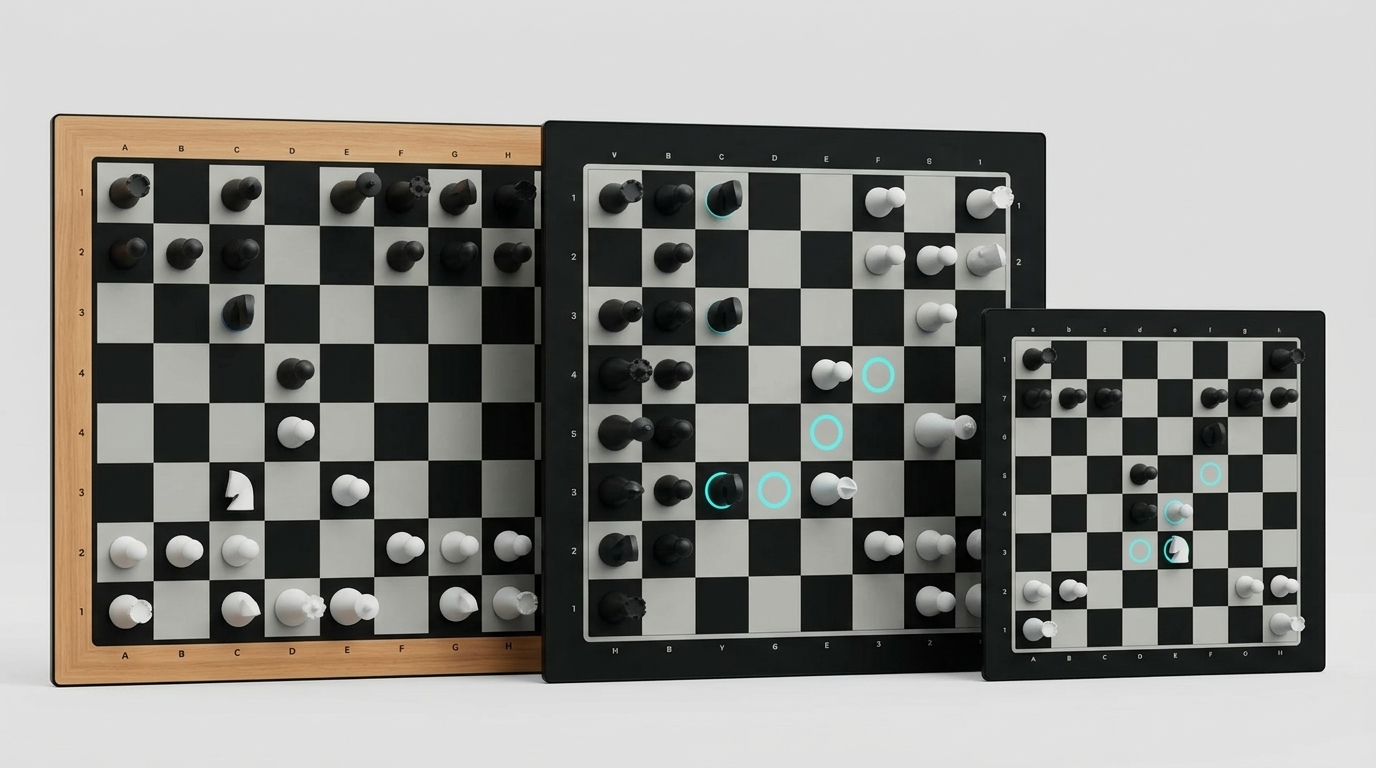
Chessnut Air is compelling for buyers who prioritize full piece recognition, a compact 13-inch footprint, and a wooden board. Its official listing states Chess.com and Lichess support plus LEDs. At $249.99 when checked on 2026-07-18, it was the least expensive of the three directly priced boards here.
Full piece recognition is more than another way to illuminate a square. It means the board’s stated strength is identifying the pieces, a useful distinction for players who care about that recognition model. The official Chessnut Air listing pairs it with a compact wooden format, so the buying case combines sensor behavior with material and footprint.
The trade-off is that “compact” and “wooden” are preferences, not universal upgrades. A buyer should picture the board where it will actually live and decide whether a 13-inch format feels suitably portable or smaller than desired. Likewise, online-platform support matters only if those services are part of the weekly routine.
| Board or category | Verified strength | Price checked 2026-07-18 | Best fit |
|---|---|---|---|
| GoChess Lite Modern | Real-time coaching lights; Chess.com and Lichess compatibility; 32 AI levels | $269.95 sale; $299.95 regular | Players who want guided moves while moving every piece themselves |
| ChessUp 2 | Color touchscreen, lessons, Stockfish feedback, and official Chess.com support | $349.99 sale; $399.99 regular | Learners who want a more self-contained on-board interface |
| Chessnut Air | Full piece recognition, wooden board, LEDs, and 13-inch footprint | $249.99 | Players prioritizing recognition and a compact wooden format |
| DGT range | Established electronic and tournament-oriented chess range | Verify by current model | Buyers whose workflow begins with tournament or established DGT use |
| Robotic boards | Automated physical piece movement | Verify by current model | Buyers for whom self-moving pieces are the main experience |
Where does DGT still make the most sense?
DGT deserves consideration when the buyer’s priority is an established electronic or tournament-oriented chess ecosystem rather than consumer coaching features. Its official range spans several products, so exact price and interface requirements must be checked model by model instead of treating “DGT” as one interchangeable board.
That is a genuine strength, particularly for someone aligning home equipment with organized chess or an existing DGT workflow. The current DGT product site is the right place to begin that model-specific check. This guide does not assign one DGT price because the evidence is a range, not a single comparable listing.
A home learner who mainly wants illuminated guidance or a lesson interface may find the consumer-focused alternatives easier to evaluate. Conversely, a tournament-minded buyer should not be steered away from DGT merely because another board has brighter coaching language. The use case comes first.
There is also a difference between owning a board for daily study and assembling an electronic setup for a specific chess environment. The former rewards convenience and immediate feedback. The latter may place more weight on compatibility with an established workflow. Buyers should name which of those projects they are funding before comparing a single consumer model with an entire DGT range.
Do you need a robotic board instead?
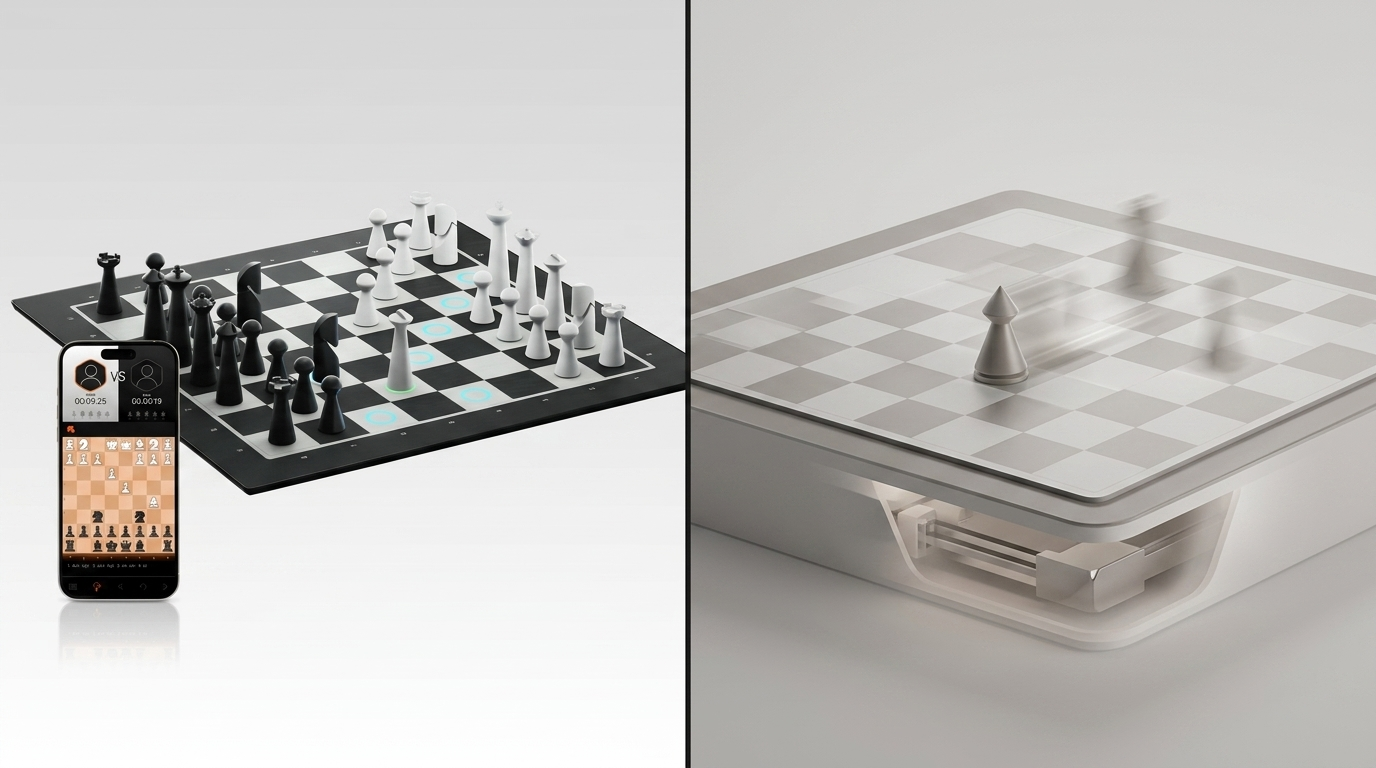
You need the robotic category only if automated piece movement is central to the experience you want. GoChess Lite guides moves with lights but does not move pieces. A board can support online or AI play without physically carrying the opponent’s pieces across the squares, so confirm that distinction before buying.
This is the easiest smart-board expectation to get wrong. “Electronic,” “connected,” and “smart” do not promise a movement mechanism. Light guidance can tell the player what to move; piece recognition can identify what is on a square; neither means the board will complete the move.
Robotic movement can be the right choice for a remote-play spectacle or for someone who explicitly wants the opponent’s moves represented physically. It also changes the hardware proposition. If motion is only a passing curiosity, a coaching or recognition board may devote more of its value to features the player will use every game.
Which board is best for learning chess at home?
For learning at home, choose the feedback loop the player will repeat: GoChess for light-guided moves and 32 AI levels, ChessUp 2 for touchscreen lessons and Stockfish feedback, or Chessnut Air when full piece recognition and online-platform support are the priorities. Hardware alone does not guarantee improvement.
A productive loop is simple: play a move, receive understandable feedback, make another decision, and return for the next session. Buyers should compare how each board delivers that loop rather than counting every available mode equally. The player who ignores a built-in lesson gains nothing from it; the player who wants guidance on the squares may use lights constantly.
Also decide how much device involvement is acceptable. GoChess lists Bluetooth app connectivity, while ChessUp 2 emphasizes its on-board screen. This is not a contest between “with app” and “without app”; it is a question of where the player wants the information to appear. Account setup, charging, updates, and current platform support belong in that decision because they affect whether practice begins promptly.
What should you check immediately before ordering?
Recheck the exact model’s price, stock, warranty, included pieces, device requirements, and essential online integration on its official page. Confirm whether the board guides, recognizes, displays, or physically moves pieces; those are not synonyms. Treat all prices in this guide as dated 2026-07-18 snapshots, not standing offers.
For GoChess Lite Modern, the verified package includes 32 pieces plus two extra queens and a one-year warranty. For ChessUp 2, the cited page is the source for its current screen, lesson, Chess.com, Stockfish, price, and battery details. For Chessnut Air, recheck its stated platforms, recognition, dimensions, material, and price. For DGT, select a model before comparing interfaces or cost.
Finally, name the one feature that would reverse your choice. If Chess.com support is essential, verify it again. If the board must identify every individual piece, do not substitute square guidance. If pieces must move on their own, remain in the robotic category. That one-sentence test is more reliable than a generic “best board” badge.
What is the final buying recommendation?
Buy GoChess Lite Modern for light-led coaching and flexible face-to-face, online, or AI play; ChessUp 2 for a touchscreen-centered lesson experience; Chessnut Air for compact wooden full-piece recognition; or DGT for an established electronic and tournament path. Choose robotic hardware only when self-moving pieces are non-negotiable.
Particula’s ownership of GoChess is relevant, but it does not erase the other products’ strengths. ChessUp 2 presents the clearest on-board lesson interface in this evidence set. Chessnut Air is the compact wooden recognition-led option and carried the lowest verified price of the three consumer boards on the check date. DGT addresses a more established tournament-oriented context.
The best purchase is therefore conditional: the board whose defining strength appears in the player’s ordinary week. Decide where feedback should appear, whether individual piece recognition matters, whether automated movement is required, and which online service must work. Then verify that single essential capability and the current commercial terms before paying.
Official sources: Particula’s GoChess Lite Modern listing, Bryght Labs’ ChessUp 2 listing, Chessnut Air’s official listing, and the DGT product site. Product details and prices above were checked on 2026-07-18.