Updated July 2026
Improving at chess alone is the dream, isn’t it? It’s just you, a coffee, and the privacy to make absolute fools of your bishops without a witness. It’s flexible, it’s quiet, and nobody judges your pajamas.
But, tbh, solo chess practice usually turns into a mindless spiral of 1:00 AM puzzles and losing to a bot that plays like a caffeinated grandmaster. Without a coach or a rival, you aren’t actually getting better. You’re just repeating the same bad habits until they’re permanent.
The problem isn't your discipline; it's that solo chess is a feedback desert. It's hard to stay sharp when your training feels like clicking buttons on a screen. Here is what a real solo routine looks like, and why GoChess is the best way to practice chess alone.
Why Solo Chess Practice Often Fails (And What to Do Instead)
You solve a few puzzles. You play one bot game. And somehow that counts as training. Sometimes it does. Often it's a fake mustache routine: looks like training, fools nobody.
The main problem is simple: when you practice alone, nobody interrupts your bad habits. Nobody tells you that your "interesting attacking idea" was actually a free knight. A lot of players also lean too hard on one format with only puzzles, only bot games, only random play with no clear goal and wonder why nothing sticks.
Good solo practice needs rhythm, challenge, correction, and realism. Here is where most routines break down:
|
Why solo practice fails |
What is missing |
|
You blunder and only notice it after the game |
Feedback during the move, not after it |
|
Sessions are all puzzles or all bot games |
A loop: warm-up, focused game, review, goal |
|
The bot is too easy or crushingly hard |
Difficulty you can dial up or down |
|
Screen fatigue sets in after 20 minutes |
Physical pieces. Something to move with your hands |
|
You finish a game and immediately forget what happened |
A saved record you can return to and learn from |
The fix is a better routine, not more willpower. A practical solo session looks like this:
- Warm up with tactics. Lichess's tactics trainer is free, requires no account, and 5 minutes is enough to wake up your pattern recognition without burning out before the main game. That kind of warm-up makes sense because recent coaching guidance still treats tactical work as one of the fastest ways to improve at club level, which is why it earns the first slot.
- Play one focused game. Not five chaotic ones. One. Chess.com’s computer opponent lets you set difficulty by ELO, so you can find a range that's challenging without being punishing.
- Review 1 to 3 mistakes. Not every move. Just find the moments that mattered most and ask: what exactly was I thinking here? Both Lichess and Chess.com offer free engine analysis. Chess.com's improvement guidance is clear on this: honest game analysis is where mistakes turn into actual lessons.
- Set one goal for next time. One sentence, written down. Hang fewer pieces. Slow down in sharp positions. Stop playing the opening like you are late for a bus.
The Methods That Make Solo Chess Practice Work

The routine above works. The catch is that running it across separate methods: a tactics app here, a bot game there, engine analysis somewhere else adds enough friction to quietly kill consistency. You know the feeling: you finish a game, switch apps to review it, lose the thread, and call it a night.
What actually helps is a setup that is quick to start, physically engaging, corrective during play, and easy to review after. The most common options each cover one thing well and leave something else broken:
- App-only practice (Chess.com, Lichess) is free and convenient, but screen-only training gets forgettable fast: you tap, you lose, you close the app
- A normal physical board feels like real chess and helps you focus. Moving physical pieces slows you down, makes you think through lines more carefully, and seems to help memory through the added sensory input, but it gives you no feedback when you repeat the same mistake for the fourth time
- A smart chess board bridges both: you get the modern tools of chess analysis and study, combined with the feel of playing over the board, without switching between three separate apps to do it.
Most smart chessboards handle move tracking and online play. The more capable ones record every move and let you analyze past games in detail: mistakes, missed opportunities, and patterns without relying solely on memory. Fewer go further and include an in-game coaching layer that catches blunders while the move is still forming, which is the part that matters most for solo training. That is the gap GoChess fills, and that is why it earns a closer look.

GoChess as a setup combines several things solo practice usually splits apart:
- a physical board
- connected play
- guided help
- adjustable AI
In other words, it is not just a chessboard, and it is not just an app. It sits in the much more useful middle. It offers exactly that mix: real-board play, app connection, AI levels, and coaching-style guidance built into one training environment.
And if that is what solo practice has been missing, then the next question is simple: which GoChess features actually matter when you are training alone?
Practice Chess Alone with GoChess: The Features That Actually Help
Up until now, GoChess has become a very practical answer to a very ordinary problem: how do you train alone without it feeling flat, random, or weirdly joyless?
The useful part is not that it does a hundred things. The useful part is that several of those things happen to match the exact places solo practice usually falls apart.
Practice alone with VS AI mode
One of the most useful things here is the VS AI mode, mostly because solo players do not all need the same kind of suffering.
GoChess offers 32 AI difficulty levels spanning roughly 400 to 3000 ELO, absolute beginner through advanced club player, which matters more than it sounds like it should. Too easy, and you stop paying attention. Too hard, and the game becomes a long educational experience about your own helplessness. A wide range of levels gives solo players room to repeat games, test openings, and get lower-pressure reps without every session turning into a public execution.
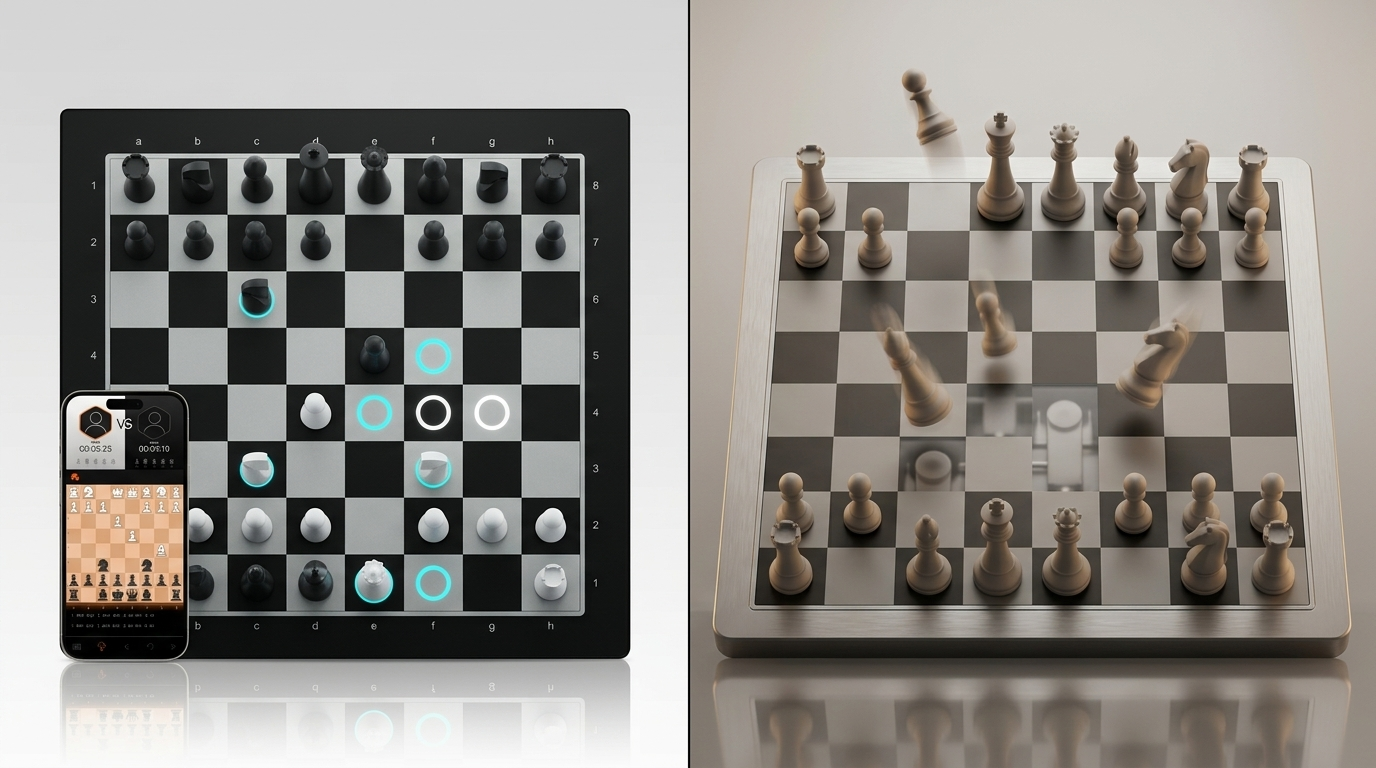
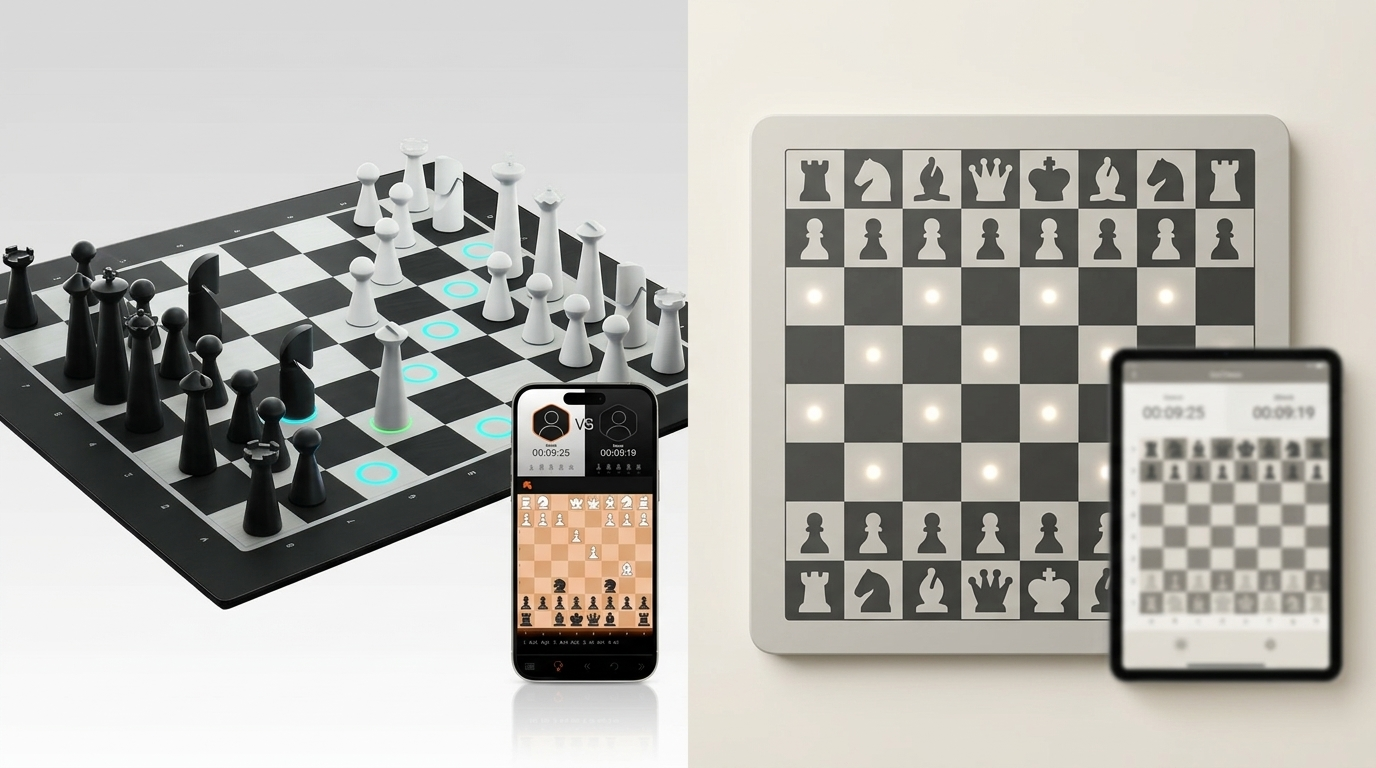
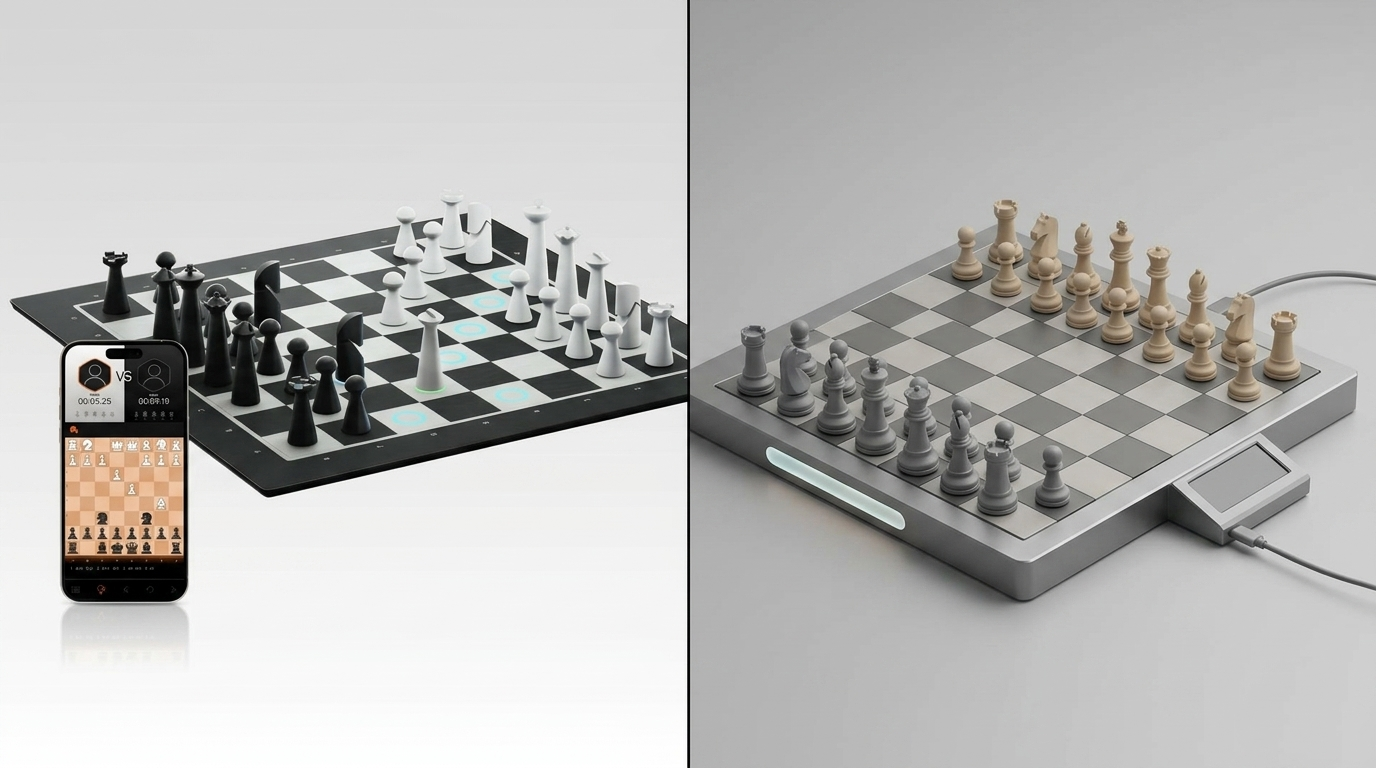
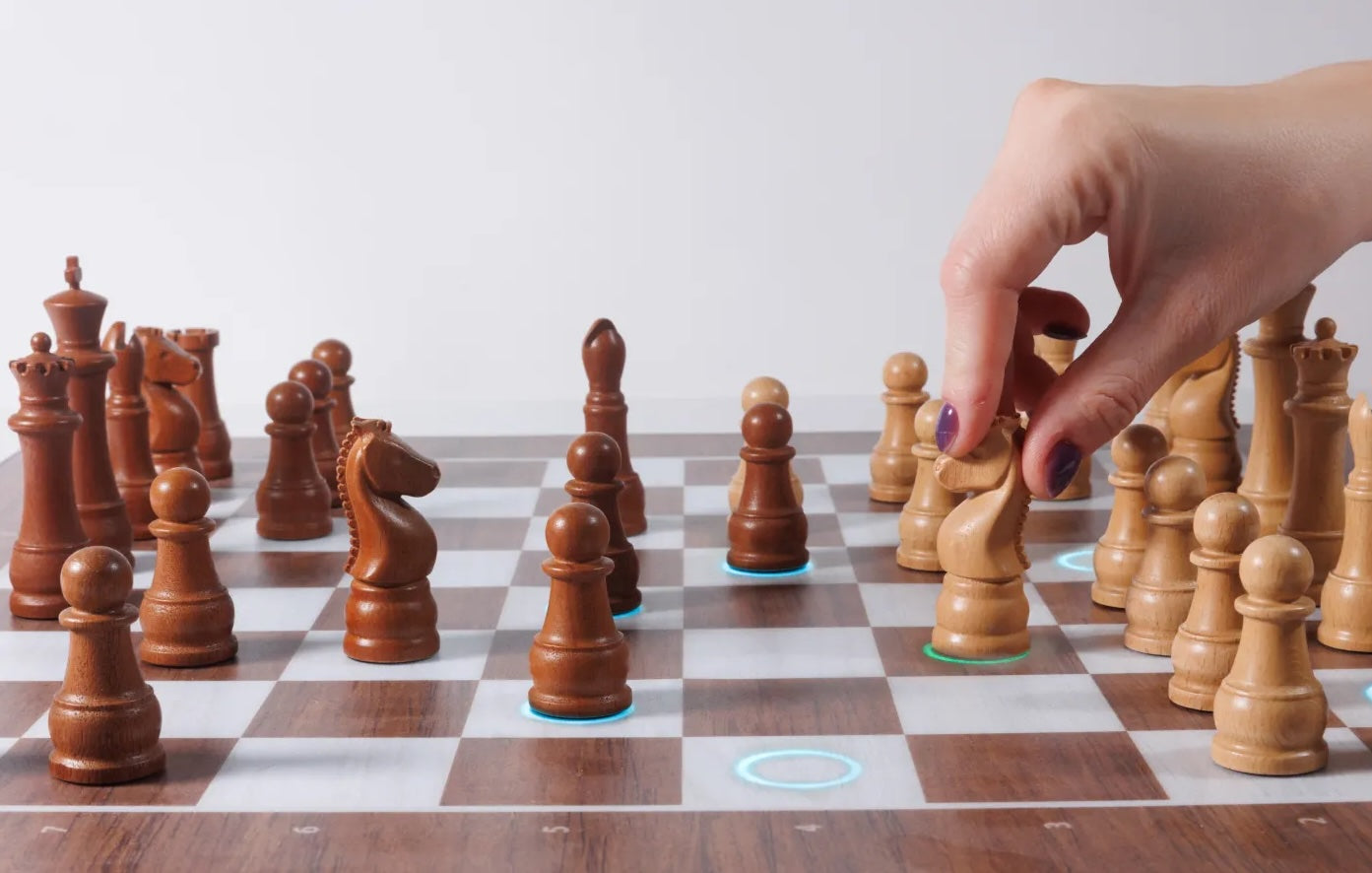
The workflow is also refreshingly straightforward: you choose the AI level in the app, make your moves on the real board, and the AI's suggested move is shown on the board via LED lights. You pick up the piece and make the move yourself, keeping the physical experience intact instead of feeling like you have just rented your hands out to a phone.
That makes it useful for:
- repeatable solo training
- opening practice without full chaos
- quick game reps when you want structure, not drama
And this is also where outside reviews start to help the case. AppleInsider’s review said the physical-board AI play is especially appealing if you do not have someone to play with regularly but still want the feel of a real board, while TechRadar liked it specifically as a tool for beginner and intermediate improvement rather than just a novelty object.
How GoChess AI coaching works when you practice alone
The more interesting part is GoChess’ AI coaching layer, because this is the bit that tries to fix the “feedback desert” problem.
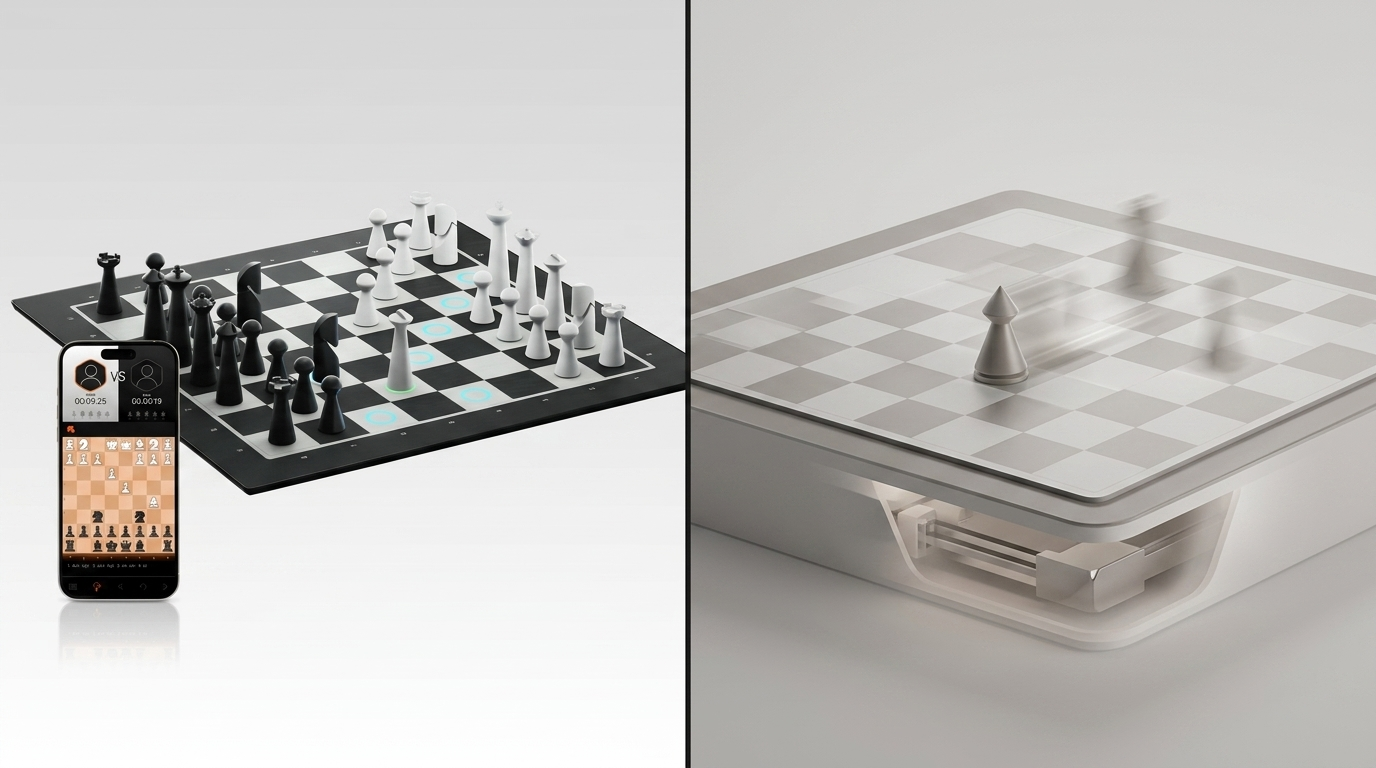
The board uses magnetic sensors to track piece positions in real time, which allows guidance to react during play instead of waiting politely until you have already made the bad decision and emotionally committed to it.

Through the Bluetooth-connected app, players can switch on different kinds of support, including:
- legal move lighting
- best piece suggestions
- best move highlights
- blunder alerts
- AI tips matched to level
GoChess matters for solo players because it changes the experience from passive to interactive. Instead of finishing a game and discovering later that half your decisions belonged in a small courtroom, you can get signals while the move is still forming.
For solo players, the practical value is pretty simple:
- it can interrupt bad habits earlier
- it makes training less mindless
- it offers a form of guidance without needing a coach sitting next to you
- it can make weaker sessions more teachable, not just more forgettable
Why the physical board matters when you practice alone
A lot of solo chess goes wrong because it becomes too screen-shaped.
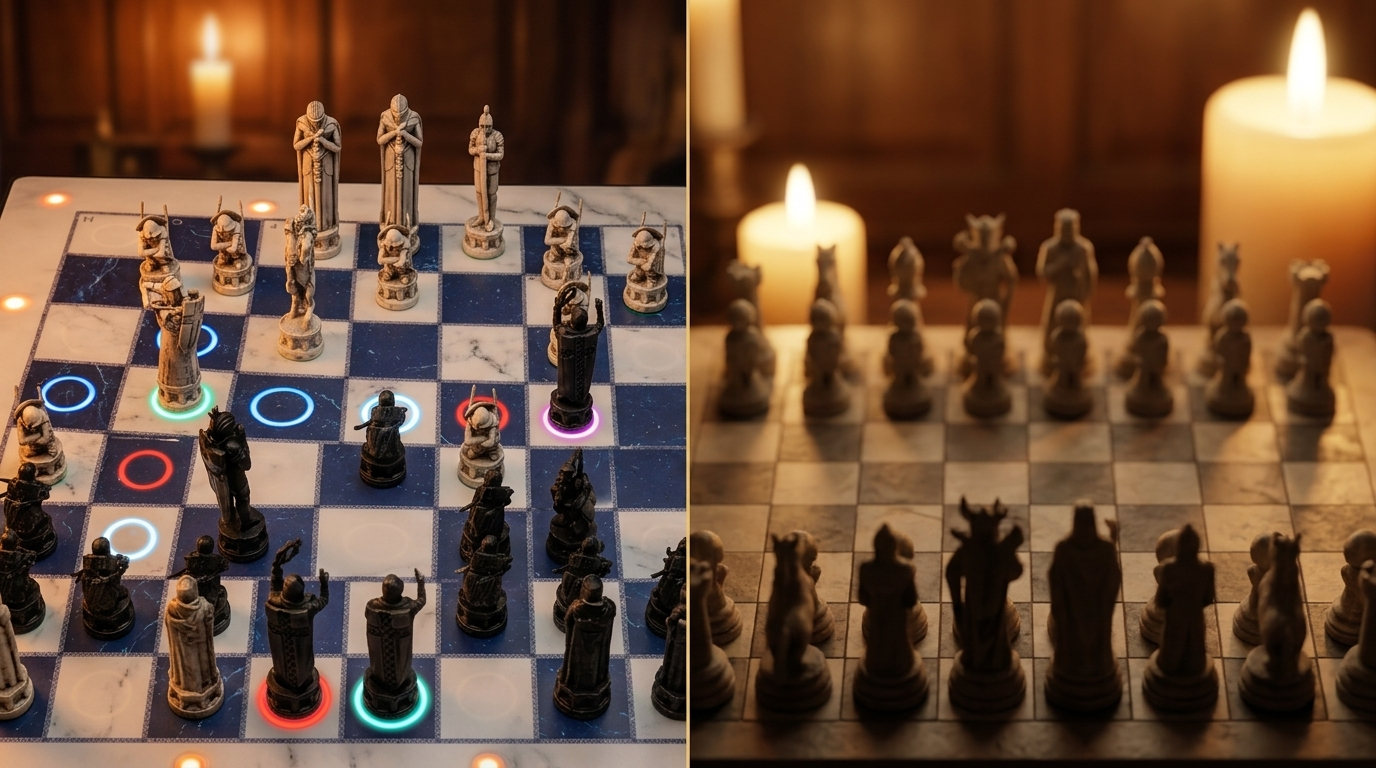
You click. You tap. You solve. You lose to a bot. You close the app and somehow remember none of it. GoChess is more interesting because it keeps the training on a real board with real pieces, while still layering in LEDs, app connection, and guidance.
That physical side matters because solo practice is easier to stick with when it feels like chess, not like admin. AppleInsider’s review made this point directly, saying the board’s physical format made it feel more like playing against someone than just using another digital chess tool.
So this is not just about aesthetics. It is about immersion, board feel, and the small but important difference between “I trained” and “I clicked around for a while.”
Review and continuity after the game
Good solo practice depends on noticing patterns, not just surviving sessions.
GoChess supports saving games, resuming later, and exporting PGN, which makes solo review much easier to organize. That matters because one of the biggest solo-practice problems is not that players never play. It is that they play, shrug, and move on. A system that helps you keep games, revisit them, and track what keeps going wrong is much more useful than one that simply lets you lose in high definition.
Starting Your Solo Chess Practice Routine
Solo chess is the only time you can be completely honest with yourself because there isn’t a soul around to see you drop your Queen like a wet plate.
Solo practice does not fail because you lack discipline. It fails because the setup makes it too easy to repeat mistakes, lose interest, and quietly stop. GoChess fixes the parts that usually break first: the feedback gap, the screen fatigue, and the sessions that end with nothing to show. Build the routine around that, and the improvement follows.
FAQ
Can you improve at chess without an opponent?
Yes. Most improvement happens alone through puzzles, game review, and AI practice. The key is including some form of feedback, like engine analysis after the game or in-game guidance during it, otherwise mistakes repeat unchecked.
How long should I practice chess alone per day?
Thirty minutes is enough. A puzzle warm-up, one focused game, and a quick review of your key mistakes fit that window comfortably. Consistency matters more than session length.
What is the best way to practice chess by yourself?
Combine a short tactical warm-up, one game at the right difficulty, and a review of 1–3 mistakes. Lichess and Chess.com cover all three for free. A smart board like GoChess adds physical feel and in-game coaching if screen-only practice isn't sticking.
How do I stop making the same mistakes when practicing alone?
Review at least one critical moment per game and set one specific goal for next time. In-game blunder alerts, available on tools like GoChess, catch mistakes while the move is still forming, rather than after the damage is done.
Is it better to practice chess with puzzles or full games?
Both, in the right order. Puzzles sharpen pattern recognition; full games build decision-making under pressure. Use puzzles as a warm-up, then play one focused game.
For current product details, see GoChess Lite Modern. Check the official listing for current availability and supported features before choosing.
Frequently asked questions
Can you practice chess alone with GoChess Lite Modern?
Yes. The official GoChess Lite Modern listing includes an AI mode, so a solo player has a verified way to practice without a human opponent. The listing also states that the board offers 32 AI levels.
How many AI levels does GoChess Lite Modern offer?
GoChess Lite Modern offers 32 AI levels according to its official product page. That range gives solo players multiple verified challenge options, although the listing should be consulted for the most current description of the available settings.
Does GoChess Lite Modern include guidance for practice?
Yes. Light guidance is included in the verified feature set on the official GoChess Lite Modern product page. The same page separately lists AI mode and 32 AI levels as options for solo play.
Can GoChess Lite Modern also be used with other players?
Yes. The official listing names face-to-face and online modes in addition to AI play. A solo practice routine therefore does not limit the board to solo use when a local or remote opponent is available.